

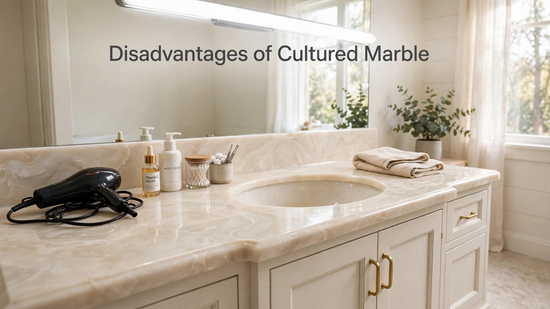
The biggest disadvantages of cultured marble are a thin gel coat that scratches and loses its shine, poor heat and chemical resistance, and a tendency to yellow or crack over time. Damage is hard to hide, and a crack in an integrated sink usually means replacing the entire countertop.
Key Takeaways
- Cultured marble is a cast blend of crushed stone and polyester resin, and its clear gel coat absorbs nearly all daily wear.
- A scratch deep enough to catch a fingernail has usually broken through the gel coat and needs professional refinishing.
- Curling irons, flat irons, and space heaters placed too close can scorch or yellow the surface.
- Acetone, bleach, and lye-based drain openers can dull or stain the finish quickly.
- A one-piece top with a molded bowl costs less upfront, but a cracked bowl typically forces replacement of the whole top.
What Is Cultured Marble?
Cultured marble is a man-made surface cast from crushed marble or limestone bound in polyester resin, then sealed under a thin, clear gel coat.
Fabricators spray the gel coat into a polished mold, pour the stone-and-resin mix behind it, and let the piece cure. Vanity tops, sink bowls, tub decks, and shower panels come out seamless, with no grout lines to scrub. Among the bathroom surfaces common in interior design, cultured marble sits in the middle tier: more stone-like than fiberglass, yet far cheaper than quartz.
Is cultured marble a bad choice? Not always. It suits guest baths, rentals, and tight budgets where hot tools and harsh cleaners stay off the counter. It is a weaker fit for busy primary bathrooms with daily heavy use.
What Are the Disadvantages of Cultured Marble in a Bathroom?
The disadvantages of cultured marble trace back to one weak point: the gel coat. Nearly every problem below begins when that clear layer gets scratched, overheated, or chemically attacked, because the resin core underneath has none of its gloss or stain resistance.
1. The Gel Coat Scratches Easily
Gritty cleansers, scouring pads, and dropped tools mark cultured marble far sooner than quartz or granite.
The gel coat is only a fraction of an inch thick, so a few passes with coarse sandpaper can cut straight through it. Once breached, the scratch traps soap scum, and the spot turns hazy.
2. Heat Leaves Permanent Marks
Hot styling tools and sudden hot-water shock both damage the surface.
A curling iron set down on the deck can scorch, blister, or yellow resin in seconds. In cultured marble tubs, very hot water poured onto a cold surface stresses the gel coat around the drain, which is where cracking usually starts.
3. Crazing and Hairline Cracks Develop
Crazing is a web of fine surface cracks spreading from stress points such as drains, overflow holes, and faucet cutouts.
Heavy impacts, repeated temperature swings, and a top resting on an uneven vanity all feed it. Water and grime then seep into the lines and darken them for good.
4. White and Cream Colors Turn Yellow
Cultured marble yellows as its resin and gel coat age.
Sunlit windows, heat lamps, and gel coats without UV stabilizers speed the change. Scrubbing will not reverse it, since the color shift sits inside the coating.
5. Beauty Products Stain and Soften the Finish
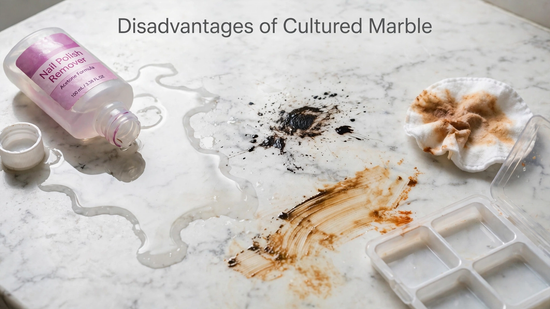
Acetone-based nail polish remover, hair dye, and self-tanner can soften or permanently stain cultured marble.
A spill left overnight does far more harm than one wiped up at once. Keep these products on a tray.
6. Repairs Rarely Disappear
Spot repairs usually stay visible.
A technician must match the base color, the swirl pattern, and the gloss level, then feather new gel coat into old. Many pros refinish the entire panel instead, which hides the transition line but raises the bill.
7. An Integrated Sink Locks You In
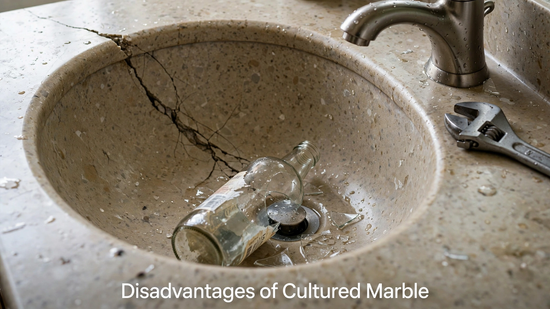
With a molded-in bowl, the sink and countertop form a single piece.
Crack the basin with a dropped glass bottle, and the whole top comes out, faucet and drain connections included. Switching later to a vessel or undermount sink also means buying a new top.
8. Sizes and Shapes Are Limited
Stock tops come in standard widths and depths, and anything unusual needs a custom mold or a seam.
Long double vanities, common in master suite floor plans, often run past stock lengths. That leaves three options: pay for a custom pour, accept a visible seam, or haul a heavy one-piece casting through tight hallways and stairwells.
9. It Reads as Budget Up Close
Under bright vanity lighting, the uniform gloss and repeating swirls look like plastic beside real stone.
Some buyers associate swirled cultured marble with builder-grade homes of the 1980s and 1990s. In a primary bath you plan to sell within a few years, that impression shows up in listing photos and showings.
How Much Does It Cost to Repair or Replace Cultured Marble?
One professional repair costs far less than a new top, yet two or three repairs often add up to the price of replacement.
According to Angi’s 2025 cultured marble cost guide, professional repairs run $100 to $400 per incident, while replacing a vanity top or shower surround ranges from $300 to more than $2,500.
Picture a 37-inch vanity top in a busy family bathroom. Over ten years it takes a curling-iron burn, a chip beside the faucet, and a bleach stain, and three repairs at $100 to $400 each total $300 to $1,200, which overlaps the full cost of replacing a small top.
Replacement carries hidden labor too. Someone has to disconnect the faucet and drain, and tops glued down with construction adhesive can pull veneer or trim off the cabinet on the way out. Our comprehensive guidesto bathroom budgets recommend a simple test: total the repair quotes so far, compare them with a single replacement quote, and stop patching once repairs pass half that figure.
What Is the Most Expensive Mistake Owners Make?
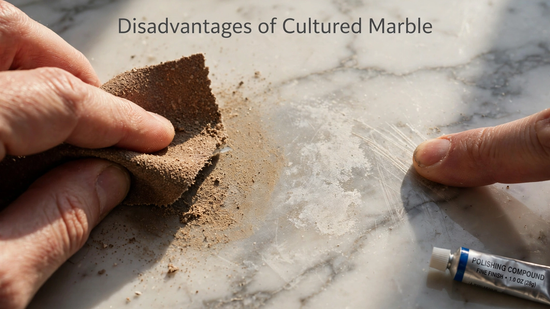
The costliest mistake is sanding scratches with coarse sandpaper, which cuts through the gel coat and turns a free fix into a paid refinish.
It happens because owners treat cultured marble like a solid surface material, where color runs all the way through and sanding is safe. Run a fingernail across the scratch first. If it glides, use polishing compound only; if it catches, call a refinishing pro before touching it.
Should You Refinish or Replace a Damaged Cultured Marble Top?
Refinish when the damage is cosmetic and the casting is solid; replace when the bowl is cracked, the top has shifted, or water has reached the core.
Refinishing fits these situations:
- Widespread dullness, haze, or yellowing
- Several shallow scratches or small chips
- A dated swirl color you want covered in solid white
Replacement fits these:
- A cracked or crazed sink bowl
- Cracks that run through the full thickness
- Soft spots or stains beneath the gel coat, a sign that water reached the core
- Any layout change, such as a new sink style or a wider vanity
A refinisher sands the old gel coat, primes it, and sprays a fresh acrylic or urethane coating. The new layer looks close to factory-fresh, but it tolerates heat and harsh cleaners even less than the original. As drhomey advice on designing a bathroom refresh suggests, schedule refinishing last, after any tile, paint, or plumbing work, so dust and dropped tools from other trades do not scar the new coating.
How Does Cultured Marble Compare With Other Bathroom Surfaces?
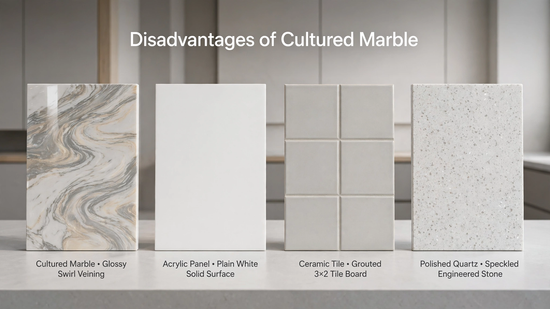
Cultured marble costs more than fiberglass or acrylic but well under quartz, and it trails tile and quartz on heat and scratch resistance.
| Shower surface | Cost figure | What the figure covers | Main durability trade-off | Source |
| Fiberglass surround | $300 to $600 | Prefab kit, materials only | Dulls and scratches; cheapest look | Fixer: How Much Does It Cost to Install a Shower? |
| Acrylic surround | $300 to $1,000 | Prefab kit, materials only | Scratches, but resists cracking | Fixer: How Much Does It Cost to Install a Shower? |
| Cultured marble surround | $600 to $2,000 | Prefab panels, materials only | Gel coat scratches, yellows, and dislikes heat. | Fixer: How Much Does It Cost to Install a Shower? |
| Tiled shower | $2,875 national average | Full installed project | Grout needs cleaning and resealing. | Inch Calculator, Cost to Tile a Shower: 2026 Price Calculator |
| Quartz shower walls | $3,200 to $7,000 | Installed, standard shower | Highest upfront cost; very hard surface | Angi, How Much Does a Cultured Marble or Stone Shower Wall Cost? |
The first three rows cover materials only, while the tile and quartz rows include labor. Add an installation quote to the cultured marble figure before comparing, or the gap will look wider than it is.
Solid surface material, often sold under the Corian name, sits just above cultured marble in price and fixes its biggest flaw: color runs all the way through, so scratches sand out at home. A practical yardstick, used in interior design by drhomey, is to weigh each surface by cost per year of good looks rather than sticker price, and a surround refinished halfway through its life often lands closer to tile than its price tag suggests.
How Can You Avoid Cultured Marble Problems If You Still Choose It?
Buy a well-made top, keep heat and harsh chemicals away from it, and clean it only with non-abrasive products. Those three habits prevent most damage.
What Daily Care and Prevention Steps Protect Cultured Marble?
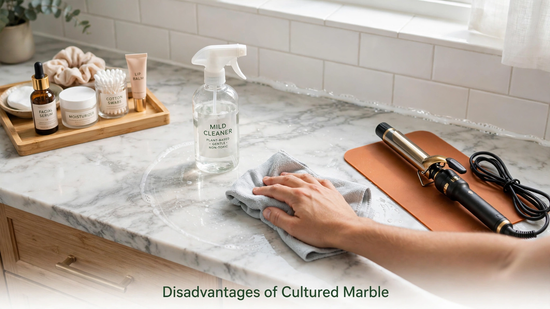
Avoid harsh chemicals, support the top properly, and stick to gentle cleaning and regular waxing.
Wolf Home Products’ Carstin cultured marble care guide warns that household bleach, hydrogen peroxide, and lye-based drain openers can harm the surface even after brief contact. Clear slow drains with a plastic drain snake or an enzyme cleaner instead, and wipe any splash within seconds.
- Check the label. Ask whether the top is certified to the ANSI Z124 standards for plastic plumbing fixtures, and inspect it for pinholes, uneven gloss, and thin edges.
- Support it fully. Set the top on a level vanity and shim any gaps, since uneven support causes stress cracks.
- Maintain the caulk. Reseal backsplash joints and shower panel seams with mildew-resistant silicone when gaps or dark spots appear, because water behind panels rots the wall.
- Give hot tools a home. Park curling irons and flat irons on a silicone mat or wall holder.
- Clean gently. Use a soft cloth and a mild, non-abrasive cleaner, never scouring powder.
- Wax a few times a year. A cultured marble polish restores shine and helps water bead off.
How Do Heaters and Room Use Change the Risks?
Nearby heaters raise the risk of yellowing, while light-use bathrooms lower the overall risk.
Many tips on How to make a room feel cozy and warm for winter suggest space heaters, heat lamps, and heated towel bars, and in a bathroom with cultured marble, where you put them matters. Aim heaters away from the vanity and mount towel warmers clear of cultured marble panels, because steady radiant heat speeds yellowing.
Frequently Asked Questions
Is cultured marble cheaper than quartz?
Yes, cultured marble usually costs far less than quartz for the same vanity or shower. The savings shrink if heat or chemical damage forces repairs, since quartz shrugs off most of that wear.
How long does cultured marble last in a bathroom?
The resin core lasts for decades, but the gel coat often looks worn long before the core fails. Professional refinishing can restore the shine and extend the surface’s useful life.
Can you put a hot curling iron on cultured marble?
No, a hot curling iron or flat iron can scorch or yellow cultured marble. Use a silicone heat mat or a wall-mounted holder for every hot styling tool.
Does cultured marble need to be sealed?
No, cultured marble does not need sealing because its gel coat is non-porous. Stone sealers do nothing for it; a cultured marble polish or wax is the right maintenance product.
Is cultured marble a good choice for a primary bathroom?
It works in a primary bathroom only if heat tools and harsh cleaners stay off the counter. Daily use, hot tools, and long ownership make the primary bath the room where a tougher surface, such as quartz, earns back its higher price.
Can you paint cultured marble?
Not with regular paint, which peels on the glossy gel coat. Epoxy or urethane refinishing kits can change the color, but a professional spray refinish lasts longer and looks smoother.
Does cultured marble crack easily?
Not under normal use. Cracks usually start from heavy impacts, uneven vanity support, or sudden hot-water shock near the drain.
Conclusion
The disadvantages of cultured marble all come back to a thin gel coat that dislikes heat, grit, and harsh chemicals. Choose it for guest baths and rentals where price matters most, and pick quartz or tile wherever hot tools and heavy daily use are the norm.