

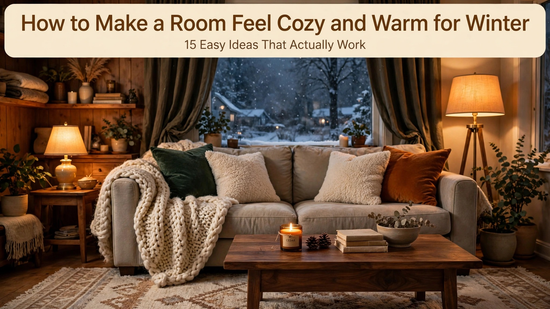
To learn how to make a room feel cozy and warm for winter, start by stopping drafts at windows and doors, then add soft layers underfoot and on furniture. Finish with warm 2700K lighting, balanced humidity, and a few textured accents so the room both feels and stays warmer.
Key Takeaways
- Cold glass and air leaks make a room feel chilly long before the thermostat reading drops.
- Lined curtains, cellular shades, and door sweeps deliver more real warmth per dollar than new décor.
- Bulbs rated 2700K or lower cast the amber glow people read as cozy, while 4000K and above reads clinical.
- Rugs, throws, and upholstered pieces soften the hard, echoing surfaces that make a space feel cold.
- A room that feels warmer lets you lower the thermostat, which trims the winter heating bill.
What Is a Cozy Winter Room?
A cozy winter room pairs physical warmth from sealed gaps and insulating fabrics with visual warmth from amber light, soft texture, and close-set seating, so people want to stay in it.
How to Make a Room Feel Cozy and Warm for Winter
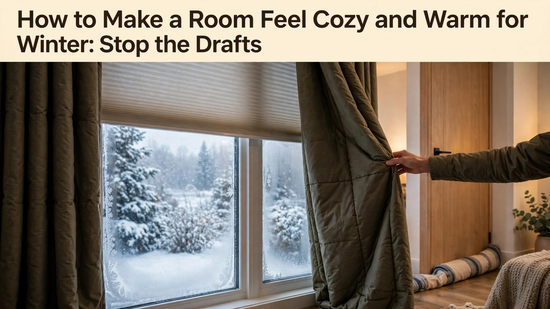
Fix heat loss first, then layer texture, light, and scent. In interior design, that order matters because a sealed, insulated room makes every throw pillow and lamp work harder.
Seal the drafts.
- Fit a fabric draft snake or adhesive sweep to any door that opens onto a garage, porch, or unheated hall.
- Hold a lit incense stick near window frames; where smoke wavers, press in rope caulk.
Insulate the windows.
3. Hang thermal-lined curtains on a rod 6 to 10 inches wider than each side of the frame.
4. Add cellular shades behind those curtains in bedrooms and north-facing rooms.
Soften the floors and furniture.
5. Cover hard flooring with a rug big enough that the front legs of every seat rest on it.
6. Slip a felt rug pad underneath for a second insulating layer.
7. Throw a thick knitted blanket over the couch arm.
8. Trade crisp cotton for flannel sheets, sherpa pillows, velvet, or bouclé.
Warm the light.
9. Swap cool bulbs for 2700K or 2200K LEDs in every lamp you use after dark.
10. Run at least three low-light sources and dim or switch off the ceiling fixture.
Arrange for warmth.
11. Pull seating off the walls and group it tightly around a coffee table.
12. Mix in walnut, rattan, brass, and terracotta to offset gray or white walls.
Fix the air.
13. Set the ceiling fan to spin clockwise on low to push pooled warm air back down.
14. Run a humidifier when static shocks and dry skin signal parched air.
Add scent.
15. Simmer orange peel and cloves on the stove, or light a cedar candle.
Why Does a Room Feel Cold Even When the Heat Is On?
Your body radiates heat toward nearby cold surfaces, so a sofa beside bare glass feels chilly even when the air is warm. Air temperature tells only half the comfort story.
The U.S. Department of Energy’s Energy Saver program estimates that roughly 30% of a home’s heating energy escapes through windows. Spend your first dollars on the window wall, not on pillows or paint.
When designing a winter room, plan around where people actually sit. Pull the reading chair a few feet off the glass, put the sofa’s back to an interior wall, and keep the coldest wall for shelving or storage.
What Is the Most Common Cozy-Room Mistake?
Buying décor before fixing drafts tops the list. People copy a styled photo, pile on blankets, and still shiver as cold air slides under the door. Seal gaps first, then decorate.
A close second: a sofa or drape blocking a heating register. It traps warm air behind it, so leave the vent a clear path.
What Lighting Makes a Room Feel Warmer?
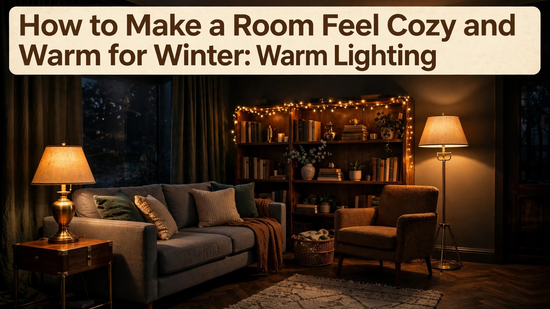
Warm-white light at 2700K or lower makes a room feel warmer, especially from several low lamps instead of one overhead fixture. Pools of lamplight create shadow and depth, which the eye reads as shelter.
Check the Kelvin rating on the bulb box, and pick a CRI of 90 or higher so wood and skin tones look rich.
The same rule applies when you’re working out how to decorate a small living room for Christmas: a lit garland along a shelf and a tabletop tree on a side table add glow without eating floor space.
Does Humidity Make a Room Feel Warmer?
Yes, moderately. Dry air speeds evaporation from your skin, so the same thermostat setting feels cooler.
The U.S. Environmental Protection Agency recommends indoor humidity stay somewhere between 30% and 50%. Place a digital hygrometer away from the kitchen and bath, run a humidifier until readings reach the low 30s, and back off the moment condensation beads on the windows.
Here’s one of the more useful interesting facts:frigid outdoor air carries very little moisture, so once your furnace warms it, relative humidity indoors falls sharply. That explains why rooms feel driest and often coldest during the hardest freezes.
How Much Can a Cozier Room Save on Heating Bills?

A warmer-feeling room lets you set the thermostat lower, and long setbacks cut the bill. Savings depend on your fuel, climate, and setback hours.
The U.S. Energy Information Administration’s Winter Fuels Outlook 2026–27 (October 2026 forecast, updated monthly) expects homes heating mainly with electricity to spend an average of $1,196 from November through March, 4% more than last winter. That rise adds about $46.
In a home with an electric furnace or baseboard heaters, suppose space heating makes up half that bill, or $598. A nightly 7–10°F setback could save up to 10%, roughly $60 this season. Heat-pump homes should stick to small setbacks (see the FAQ below) and lean on sealing drafts instead, which keeps paying back every winter. Planning around real costs like these is the approach behind interior design by DrHomey
| Figure | What it measures | Source |
| Up to 10% a year | Heating money saved by turning the thermostat down 7–10°F for 8 hours daily | U.S. Department of Energy, Energy Saver |
| $640, down 9% | Average 2026–27 winter spend, homes heating mainly with natural gas | U.S. Energy Information Administration |
| $1,246, down 3% | Typical 2026–27 winter cost, homes mostly heated by propane | U.S. Energy Information Administration |
| $2,115, up 21% | Typical 2026–27 winter cost, homes mostly heated by heating oil | U.S. Energy Information Administration |
The fuel figures describe different households in different climates and cover all uses of each fuel, so a lower number does not mean switching would cut your bill.
When Does the Usual Cozy Advice Not Apply?
Rooms with cast-iron radiators beneath the windows break the floor-length-drape rule. Heavy fabric traps radiator heat against cold glass, so use sill-length curtains there instead. Painting the radiator the same color as the wall makes it disappear while it keeps warming the room, a trick worth knowing if you’re figuring out how to make an old house look modern.
Frequently Asked Questions
What colors make a room feel warmer in winter?
Earthy, red- and yellow-based shades such as terracotta, ochre, rust, and warm greige make a room feel warmer. Pillows, a throw, or one accent wall add them without a full repaint.
Do area rugs actually make a room warmer?
Yes, a rug slows heat loss from your feet into a cold floor, so the room feels warmer even when the air temperature stays the same. Wool and thick pile insulate best, especially over a felt pad.
Can I make a rented room cozy without painting or drilling?
Yes, renters can rely on tension-rod curtains, adhesive door sweeps, plug-in lamps, and layered textiles. DrHomey favors these reversible fixes because they move with you to the next apartment.
Do candles or space heaters warm a room?
Candles add mood but almost no measurable heat, while a space heater warms a small zone fast. Pick one with a tip-over shutoff and keep it three feet from the fabric.
Does a heat pump change the cozy-room advice?
Yes, heat pumps work best with small, steady thermostat changes rather than deep overnight drops. A large setback can trigger costly backup resistance heat, so lean harder on curtains, rugs, and throws instead.
Conclusion
Knowing how to make a room feel cozy and warm for winter comes down to one sequence: block the cold, soften the surfaces, then warm the light. Follow that order and the room feels better within a weekend, while the heating bill feels lighter by spring.