

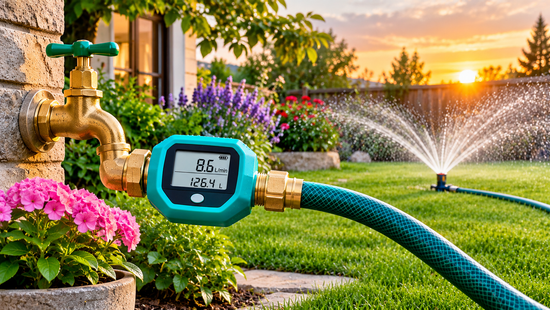
Most gardeners know how long they water, but few know how much water actually leaves the hose. Without that number, it is hard to tell whether a lawn is getting too little, too much, or just enough. Measuring outdoor water use helps you protect plants from stress, avoid runoff, and cut waste, and it often lowers your water bill during the growing season. This article covers how to measure water in a garden or lawn setting, how to use the results, and which habits and tools support efficient irrigation.
Why Measuring Garden Water Matters
Garden irrigation is often guesswork. A sprinkler runs for thirty minutes because that is what the schedule says, not because the soil needs it. Adding a water flow meter to your hose line shows exactly how many gallons or liters pass through during each watering session. With that figure, you can compare zones, spot leaks in hoses and fittings, and confirm that your sprinklers or drip lines deliver what you expect. Once you track real numbers, you can match watering to what your lawn, vegetables, and shrubs actually need rather than to habit.
How Hose Flow Is Measured
The simplest way to understand your flow rate is the bucket test. Hold a bucket of known size under the hose or sprinkler outlet, time how long it takes to fill, and divide the volume by the time. If a five gallon bucket fills in one minute, your flow is five gallons per minute. This works well for a quick check, but it cannot track total use over a full session.
For ongoing measurement, many gardeners install a hose thread meter between the spigot and the hose. These devices usually display total volume and sometimes current flow rate. Some models are mechanical with a simple dial, while others are digital and store readings from several sessions. When choosing one, look for a thread size that matches your spigot, a flow range suited to garden hoses, and a casing that tolerates weather and sun exposure. Keep in mind that water pressure affects readings. A pressure regulator at the spigot can make results more consistent and also protects hoses and drip fittings.
Calculating Lawn Watering Needs
Once you know your flow rate, you can turn it into a useful irrigation measurement. Most lawns need roughly one inch of water per week during the growing season, including rainfall, though this varies with climate, grass type, and soil. To apply one inch over one square foot, you need about 0.62 gallons. A lawn of 1,000 square feet therefore needs about 620 gallons for a full inch.
To check how long your system needs to run, place several shallow containers, such as tuna cans, across the lawn and run the sprinkler for a set time. Measure the depth of water collected, and you will know how many minutes it takes to deliver half an inch or a full inch. Combine this with your flow data and you can adjust run times with confidence. Uneven results across containers also reveal problems such as clogged nozzles, poor overlap, or pressure issues.
Choosing Tools That Deliver Water Efficiently
Measurement is only half of good irrigation. The tool at the end of the hose decides how gently and accurately water reaches the soil. For container plants, hanging baskets, flower beds, and tight garden corners, a long handled wand with a soft shower head lets you water at the base of the plant instead of soaking leaves. If you are searching for the best watering wand, focus on a few practical features: a comfortable grip, a shutoff valve that lets you pause between plants, adjustable spray patterns, and a length that reduces bending or stretching. Lightweight materials and sturdy fittings matter too, since a wand that leaks at the connection wastes the water you are trying to save.
Other efficient tools are worth considering as well. Drip lines and soaker hoses deliver water directly to the root zone with very little evaporation. Oscillating and rotary sprinklers suit lawns, provided they are sized for the area. Timers and moisture sensors reduce the chance of watering when the soil is already damp.
Water Conservation Habits for the Whole Season
Good equipment works best alongside consistent habits. Water early in the morning, when temperatures are lower and winds are calm, so less evaporates before the water soaks in. Water deeply and less often, since this encourages roots to grow downward and makes plants more tolerant of dry spells. Frequent shallow watering keeps roots near the surface and increases dependence on irrigation.
Mulch is another low effort way to conserve moisture. A two to three inch layer over garden beds shades the soil, slows evaporation, and suppresses weeds that compete for water. Grouping plants with similar water needs makes watering more precise, and collecting rainwater in barrels gives you a free supply for beds and containers.
Regular maintenance also protects water. Check hose connections, spigots, and drip fittings for leaks each month. A small drip at a fitting can waste hundreds of gallons across a season. When you track usage with a meter, an unexpected jump in volume is often the first sign of a leak or a damaged line.
Finally, adjust through the seasons. Plants need less water in cool weather and during rainy periods, and more during heat waves. Recording your weekly totals in a simple notebook or spreadsheet gives you a personal reference that improves from year to year. In late autumn, drain hoses and disconnect measuring devices before freezing temperatures arrive, since trapped water can crack housings and fittings.
Conclusion
Efficient garden irrigation starts with knowing how much water you actually use. A simple bucket test, a hose mounted meter, and a few containers on the lawn give you the data to water with purpose rather than habit. Pair that information with the right delivery tools, deep and infrequent watering, mulch, and regular leak checks, and you will keep your plants healthier while using less water. Small changes, repeated across a season, add up to meaningful savings for both your garden and your household budget.