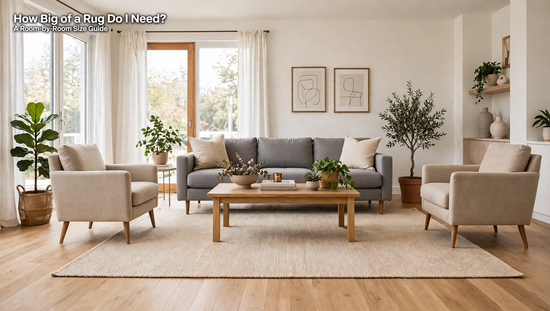

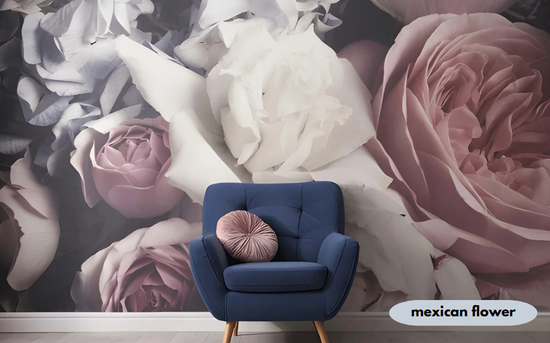
A Mexican flower wallpaper or textile works best when one bold bloom, such as a dahlia or marigold, leads the room and neutral walls or plain furniture support it. Begin with cushions or a feature wall, stick to three hues, and match pattern size to the surface.
Key Takeaways
- Dahlias suit formal rooms, marigolds suit casual spaces, and poinsettias suit seasonal corners, so pick the bloom by mood.
- A 12-foot by 8-foot accent wall needs five single rolls of patterned wallpaper once pattern waste is counted.
- Large florals belong on large walls, and small prints belong on cushions, curtains, and table linens.
- Drawing three shades from one print prevents a floral space from feeling cluttered.
- Cypress trees and potted blooms can repeat indoor colors outdoors and link the interior to the exterior.
What Is Mexican Flower Design?
Mexican flower design is a decorating style that prints or embroiders blooms tied to Mexico, such as dahlias, marigolds, and poinsettias, in saturated color on walls and fabrics.
Which Mexican flower patterns work best on walls and fabrics?
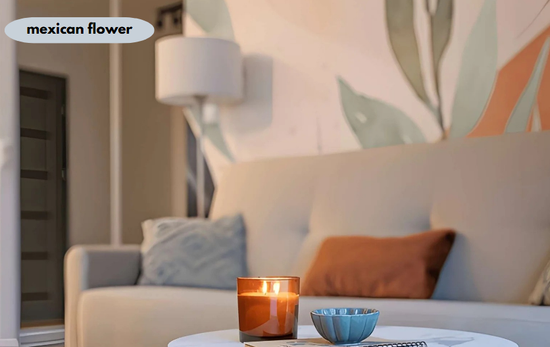
Dahlia, marigold, and poinsettia patterns work best because each has a clear shape and a strong color range. Dahlias fit elegant spaces, marigolds suit relaxed rooms, while poinsettias brighten seasonal nooks.
According to the American Dahlia Society’s account of the bloom, a May 13, 1963, presidential decree officially made the dahlia Mexico’s national flower. Choose it when you want the most recognizable anchor print. Skip marigolds in a bedroom or nursery if you do not want the Day of the Dead association.
These Mexican flowers each carry a different mood and palette:
| Flower | Typical colors | Mood | Best use |
| Dahlia | Magenta, coral, deep red | Formal, layered | Dining room or entry wallpaper |
| Marigold (cempasúchil) | Orange, gold | Warm, festive | Kitchen curtains, table runners |
| Poinsettia (nochebuena) | Red, cream, green | Seasonal, bold | Pillows, holiday linens |
| Prickly pear blossom | Yellow, pink, sage | Desert, relaxed | Bedroom paper, linen bedding |
Why are Mexican flower designs trending in American homes?
Buyers want color and handmade character, and Mexican floral prints deliver both in one pattern. The style also brings travel and heritage into a room, which makes a space feel personal.
The U.S. Census Bureau’s Vintage 2024 estimates, released in 2025, count about 68 million Hispanic residents, close to 20% of the nation. Retailers respond to those shoppers, so these patterns now appear in mainstream shops, with no specialty importer required.
Prints of Hispanic flowers also pair well with linen and jute, which keeps an interior design scheme grounded.
How do you use Mexican flower wallpaper in a room?
Keep it to a single wall, except in a small room with a subdued pattern. Behind a bed, couch, or dining table, a feature wall makes the print a clear focal point.
- Take the wall’s width and height in feet, then multiply both.
- Fit the repeat to the wall: walls above 10 feet call for a repeat larger than 18 inches.
- Select three shades from the design for paint, trim, and fabric.
- Tape a swatch on the wall for three days, observing it under both morning sun and lamplight.
- Buy rolls per the calculation below, adding one extra.
How many wallpaper rolls does an accent wall need?
A 12-foot by 8-foot wall needs five single rolls of patterned wallpaper. The count looks like four on paper, but pattern matching and one spare roll raise it.
Assume a single roll covers 28 square feet and the matching waste is about 10%, leaving roughly 25 usable square feet. The wall measures 12 × 8 = 96 square feet, and 96 ÷ 25 = 3.84, which rounds up to four rolls. Add one spare from the same batch for cutting errors and repairs, and you buy five. Check your paper’s label, because coverage and repeat size vary by brand.
What mistakes ruin a Mexican flower room?
Most problems stem from three mistakes: layering multiple big patterns, skipping a sample, and combining wallpaper with cool white trim.
Large prints compete, so pair one big floral with a stripe or a solid. A sample shows how daylight changes the colors. Cool whites turn warm pink tones muddy, so choose an off-white matching the lightest hue within the design. The best advice on designing with bold florals is to repeat a color rather than add another pattern.
How do Mexican textiles carry the trend beyond walls?
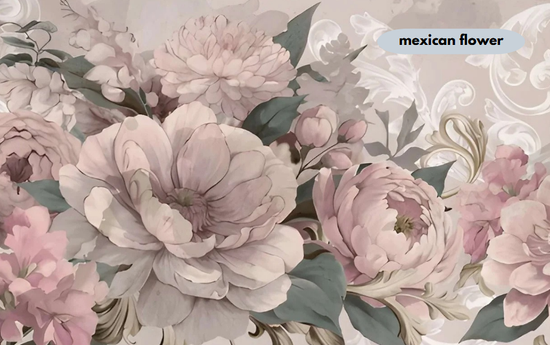
Textiles let you test the style at low risk, because cushions, curtains, and table runners carry the same blooms without a wall commitment. Embroidery and weaving also add texture that paper cannot.
One of the drhomey interesting facts for decorators is that Otomí embroidery from Hidalgo packs flowers and animals into dense, bright thread, so one pillow can work as art. Three tips keep textiles balanced:
- Give each seating area one embroidered item on simple furniture.
- Curtain patterns should stay smaller than wallpaper patterns.
- Echo the dominant wallpaper shade through one rug, pillow, or throw.
Comprehensive guides to pattern mixing rely on one scale rule: each print should be roughly double the size of the following one.
Can cypress trees and Mexican flowers work together in exterior design?
Yes. A row of cypress trees gives a dark, vertical backdrop, and Mexican flowers in beds or pots supply color against it. Repeat one indoor color on the porch, such as marigold yellow on a door or planters, to connect exterior design with the rooms inside.
Mexico’s native species is the Montezuma cypress, and its famed example stands in Oaxaca: the Tule Tree. According to Oregon State University Extension, the trunk measures roughly 38 feet across the flared base yet roughly 31 feet by cross-section. The larger number includes the buttressed roots, while the smaller reflects the functional trunk. This difference reveals that a cypress demands much more space than its nursery container implies, so position it well clear of foundations and pool edges. For colder states, choose bald cypress, a near relative that handles soggy soil.
Avoid wall-to-wall florals in rentals, tight hallways, and steamy bathrooms. For rentals, opt for peel-and-stick panels or fabrics rather than permanent wallpaper. Bathrooms call for moisture-rated vinyl wallpaper, since regular paper lifts away in steam.
FAQ
Which flower has been named Mexico’s national flower?
Mexico chose the dahlia as its national flower. Marigolds are the blooms found on Day of the Dead altars, while locals call the poinsettia nochebuena.
Which hues match Mexican floral decor?
Vivid pink, orange, and marigold yellow work best when combined with rich green and a warm off-white. Stick to three of these shades per room, echoing them through your paint, fabric, and accessories.
Can Mexican floral wallpaper work in compact rooms?
Yes, as long as the pattern is small-scale and its colors stay light or mid-tone. Large, dark flowers can make compact spaces feel cramped, so reserve them for bigger walls.
How can Mexican textiles be combined with modern furniture?
Set one embroidered or patterned item on simple, neutral furniture. One pillow or throw for each seating area delivers the style without overpowering sleek lines.
Are cypress trees indigenous to Mexico?
Yes, the Montezuma cypress is indigenous to Mexico and thrives beside rivers and streams. Known locally as “ahuehuete,” it is a close cousin of the bald cypress found across the southern United States.
Conclusion
A Mexican flower pattern works when one bloom leads, three colors repeat, and the scale fits the surface. Begin with fabrics or one accent wall, then extend the palette outside using potted flowers and cypress trees. DrHomey recommends measuring and testing samples before purchasing, which transforms a striking print into an enduring design decision.