

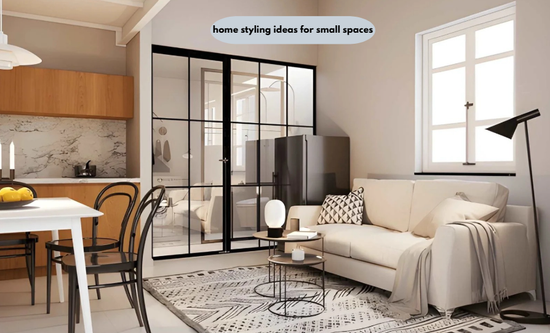
The best home styling ideas for small spaces free up floor area, bounce light around the room, and give every piece of furniture more than one job. Start with wall color and lighting, then right-size furniture, add vertical storage, and edit decor until each surface has breathing room.
Key Takeaways
- New U.S. apartments averaged 910 square feet in 2025, and studios averaged 460 square feet, according to RentCafe’s 2026 analysis of Yardi Matrix data.
- Every paint color carries a Light Reflectance Value from 0 to 100, and higher numbers return more light to the room.
- Two gallons of paint cover two coats in a 10-by-12-foot bedroom, based on Benjamin Moore’s estimate of 400 square feet per gallon.
- ENERGY STAR-rated LED bulbs use at least 75% less energy than incandescent bulbs, according to the U.S. Department of Energy.
- Replacing a wide dresser and two nightstands with a tall chest and wall shelves frees about 8 square feet of floor in a 120-square-foot bedroom.
What is small-space styling?
Small-space styling is the practice of arranging color, light, furniture, and storage so a compact room does more jobs without feeling crowded.
Nothing structural changes. Walls, plumbing, and windows stay where they are, which makes the approach suited to renters as well as owners.
What are the best home styling ideas for small spaces?
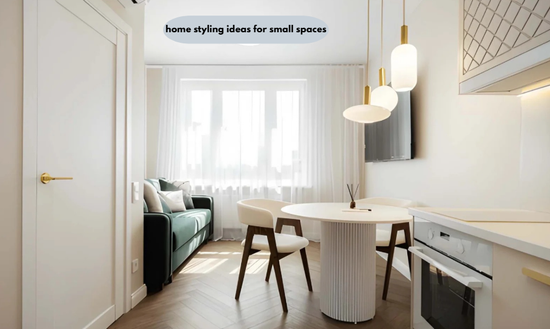
The 15 ideas below work best in order: light and color first, then furniture, then storage, then decor. Each later step depends on the one before it, and these are the interior design tips DrHomey readers request most.
- Paint walls a light color. Pale walls send more daylight back into the room, so corners stop reading as shadows.
- Match the trim to the walls. One continuous color removes the outlines that chop a wall into smaller pieces.
- Hang curtains close to the ceiling. A rod mounted high pulls the eye upward and makes the window look taller.
- Place a large mirror beside or across from a window. The reflection repeats the daylight source and adds a second view.
- Use three light sources per room. An overhead fixture, a task lamp, and one accent light remove the dark corners a single bulb leaves behind.
- Choose furniture with visible legs. A floor that shows under a sofa or bed makes the whole floor read as larger.
- Buy pieces that do two jobs. A storage ottoman, a drop-leaf table, or a bed with drawers each replaces two items.
- Take storage up the wall. Shelving that runs to the ceiling uses wall area instead of floor area.
- Mount what you can. Wall sconces, floating nightstands, and a mounted TV clear both tabletops and the floor.
- Lay one large rug instead of several small ones. A rug wide enough to sit under the front legs of every seat ties a zone together.
- Define zones in open rooms. A rug, a bookcase, or the back of a sofa separates sleeping, working, and eating areas in a studio.
- Limit the palette to three colors. A main color, a secondary color, and one accent keep the eye from jumping around.
- Hang art as one large piece or a tight grid. Scattered small frames look like clutter, while a single group reads as one object.
- Hide everyday items in closed storage. Baskets, bins, and cabinet doors conceal the visual noise that open shelves put on display.
- Leave one surface and one corner empty. Blank space is what makes the rest of the room look planned.
People asking how to decorate a small apartment often begin at step 12 or 13. Beginning at step 1 costs less, because paint and bulbs are cheaper than replacing furniture that was chosen for the wrong light.
How small is a typical small space in 2026?
A typical new U.S. studio measures 460 square feet, and a typical new one-bedroom measures 735 square feet. Those figures come from RentCafe’s 2026 analysis of Yardi Matrix data, which covers apartments completed in 2025.
| Unit type | Average size of new U.S. units, 2025 (sq ft) | First styling priority |
| Studio | 460 | Zoning and dual-purpose furniture |
| One-bedroom | 735 | Vertical storage and layered lighting |
| Two-bedroom | 1,095 | One palette carried across rooms |
| All unit types | 910 | Light walls and right-sized furniture |
These numbers are national averages for newly built units, not measurements of every existing apartment. City figures differ sharply: the same report puts new Seattle apartments at 645 square feet, about 29% below the national figure.
Two interesting facts follow from the table. A studio offers roughly half the area of the average new unit, and the national average rose from 882 square feet in 2022 to 910 in 2025, so new floor plans are growing slowly rather than shrinking.
What are the best home color schemes for small spaces?
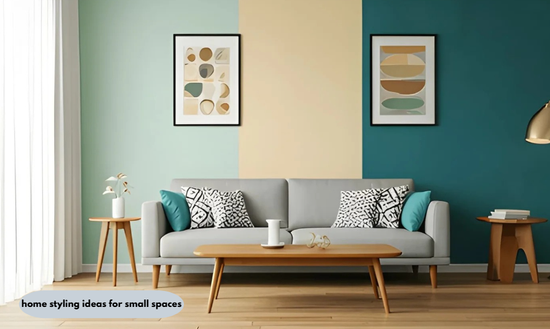
The best home color schemes for small spaces pair light, reflective walls with two supporting colors at most. Light walls work because of a measurable property called Light Reflectance Value.
Light Reflectance Value, or LRV, runs from 0 for pure black to 100 for pure white. Sherwin-Williams and Benjamin Moore publish the number for each color, so two whites that look alike on a chip can be compared before buying.
Three schemes suit compact rooms:
- Tonal neutrals: walls, trim, and large furniture in close shades of one neutral, which blurs the room’s edges.
- Light shell with one deep accent: pale walls plus a single dark element such as a headboard wall or a bookcase back.
- One color everywhere: walls, trim, and ceiling in the same shade, which hides awkward angles in attic rooms and alcoves.
How much paint does a small room need?
A 10-by-12-foot bedroom with 8-foot ceilings needs 2 gallons for two coats. Benjamin Moore’s paint calculator assumes 400 square feet of coverage per gallon and subtracts 20 square feet for each door.
The math: the walls total 44 feet around, and 44 times 8 equals 352 square feet. Subtracting one door leaves 332 square feet, or 0.83 gallons per coat and 1.66 gallons for two coats.
Rounding up to 2 gallons leaves about a third of a gallon for touch-ups. Among modern home decorating ideas on a budget, paint comes first for this reason: one small purchase changes every wall in the room.
How much furniture fits in a small room?
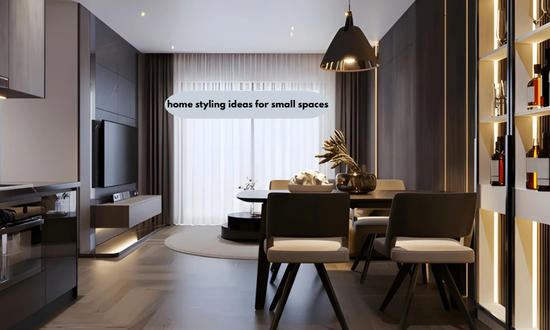
A small room holds more than most people expect when furniture is measured by floor area instead of by piece count. Most advice on designing a compact room skips this math, so the worked example below uses a 10-by-12-foot bedroom with 120 square feet of floor.
Layout A: a queen bed (60 by 80 inches), a 60-by-18-inch dresser, and two 20-by-16-inch nightstands. The bed covers 33.3 square feet, the dresser 7.5, and the nightstands 4.4 together, for a total of 45.2 square feet, or 38% of the floor.
Layout B: the same bed, a tall 32-by-18-inch chest, and two wall-mounted shelves in place of nightstands. The total drops to 37.3 square feet, or 31% of the floor.
Layout B frees about 8 square feet without giving up the bed size. That is enough for a clear path along one side of the bed, and the tall chest regains drawer space by adding height instead of width.
One of the most handy tips by DrHomey is to run the same sum for any room: multiply each piece’s width by its depth in inches, divide by 144, and add the results. Comparing two layouts on paper takes ten minutes and prevents a purchase that blocks a doorway.
What lighting makes a small room look bigger?
Layered lighting from at least three sources makes a small room look bigger, because it lights the walls and corners that a single ceiling fixture leaves dark. Bright edges are what tell the eye where a room ends.
Use LED bulbs in every fixture. ENERGY STAR-rated LEDs use at least 75% less energy and last up to 25 times longer than incandescent bulbs, according to the U.S. Department of Energy.
Heat matters in a compact room too. The same agency reports that incandescent bulbs give off 90% of their energy as heat, so three old-style lamps in a 120-square-foot bedroom warm the air noticeably while LEDs do not.
Renters can add all three layers without wiring: plug-in sconces, a floor lamp behind the sofa, and a small lamp on a shelf.
What is the most common small-space styling mistake?
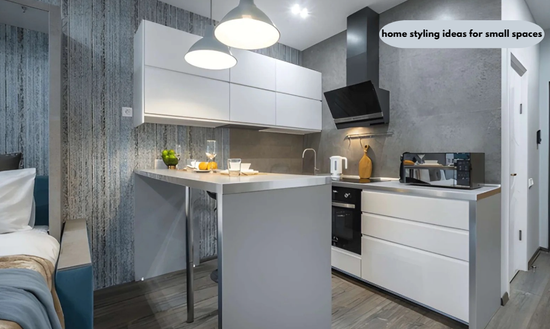
The most common mistake is filling a small room with many small pieces. It happens because shoppers assume a compact room needs compact furniture, then add more items to make up for the lost seating and storage.
The result is more legs, more edges, and more gaps for the eye to sort through. Six small items also create six footprints to walk around.
The fix is fewer, full-size pieces. One standard sofa in place of a loveseat and two chairs, or one tall bookcase in place of three low units, gives the same function with a simpler outline.
When does the light-walls rule not apply?
Light walls stop helping in a room with almost no daylight, such as a windowless hallway, an interior bathroom, or a basement den. With little light to reflect, white paint looks flat and gray, so a deep color that wraps the walls and trim is the stronger choice there. Paint brands are moving the same way: Benjamin Moore named Silhouette AF-655, a deep brown, as its Color of the Year 2026. Dark walls hide the corners, which makes the room’s edges harder to read and gives it depth instead of brightness.
Frequently Asked Questions
How can I make a small room look bigger without renovating?
Paint the walls a light color, add a large mirror near a window, and replace bulky furniture with pieces that show the floor underneath. All three changes increase visible light or visible floor, which are the two cues the eye uses to judge size.
What colors make a small space look larger?
Colors with a high Light Reflectance Value, such as soft whites, pale grays, and light warm neutrals, make a small space look larger. Check the LRV printed with the color before buying, because two similar-looking shades can reflect very different amounts of light.
How do I style a studio apartment?
Divide the studio into sleeping, living, and eating zones using rugs and furniture placement instead of walls. With new studios averaging 460 square feet, a bed with drawers and a drop-leaf table keep each zone working without adding pieces.
Is it better to have a few large pieces or many small pieces of furniture?
A few full-size pieces work better than many small ones in a compact room. Fewer items mean fewer outlines and footprints, so the room looks calmer and paths stay clear.
How can renters style a small apartment without losing their deposit?
Renters can rely on changes that leave no marks: plug-in lighting, freestanding shelving, rugs, mirrors leaned against the wall, and removable hooks.The 15-step list is ordered so that most steps after painting need no drilling, and a lease that bans painting still allows steps 3 through 15 with tension rods and freestanding pieces.
Do mirrors really make a room look bigger?
Yes, a large mirror makes a room look bigger when it reflects a window or an open part of the room. A mirror facing a cluttered shelf doubles the clutter instead, so check what it shows from the doorway before hanging it.
Conclusion
The home styling ideas for small spaces that work hardest are the ones that add light and return floor area, not the ones that add objects. Measure the floor your furniture covers, choose paint by its LRV, and light the corners before buying decor. DrHomey’s 15 steps follow that order so each dollar spent early makes the later steps cheaper.
