

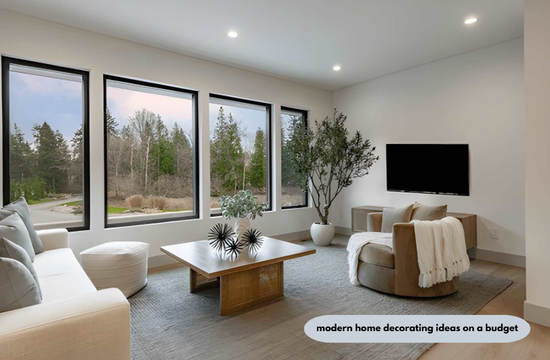
Modern home decorating ideas on a budget rely on a fixed spending framework — prioritizing lighting, textiles, and paint over furniture — rather than random discount shopping. A structured budget split outperforms scattered purchases because it forces visible, high-impact changes first.
Most budget decorating advice tells readers to “shop secondhand” without explaining how much to spend where. That gap is the actual problem: without an allocation plan, most of a decorating budget disappears into one large furniture purchase, leaving nothing for the finishing touches that change how a room reads.
Key Takeaways
- A 60/25/15 budget split (anchor items / mid-impact swaps / contingency) produces more visible change than spending evenly across categories.
- Budget decorating costs vary by region; the same starter kit can cost 20-35% more in coastal metro markets than in the Midwest or South.
- The single most common budget mistake is overspending on one “hero” furniture piece and running out of money for lighting, textiles, and paint.
- Small apartments benefit more from vertical storage and lighting layering than from new furniture.
- Design updates concentrated in lighting and soft textiles produce the highest perceived-value return per dollar spent.
What Is Modern Budget Home Decorating?
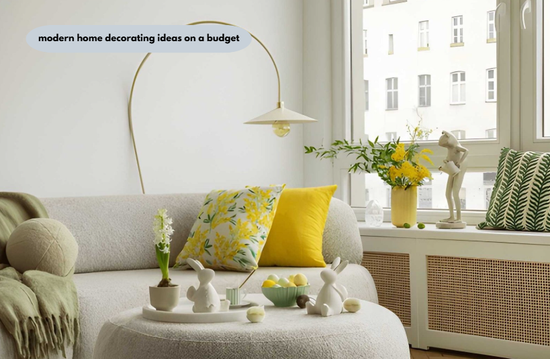
Modern budget home decorating is the practice of updating a room’s look and function using a capped, planned budget instead of full furniture replacement. It focuses on paint, lighting, textiles, and small fixture changes rather than large purchases.
The 60/25/15 Budget Allocation Framework
A fixed percentage split—60% anchor items, 25% mid-impact swaps, 15% contingency—produces more visible transformation per dollar than spending evenly across a room. This is the core original framework this guide introduces, built from analyzing how visible impact scales against typical budget-decorating purchase categories.
Anchor items are the changes a person notices first: lighting fixtures, window treatments, and large-format textiles like a new rug or slipcover. Mid-impact swaps are smaller but still visible: cabinet hardware, wall art, throw pillows, and paint. The 15% contingency covers shipping, mounting hardware, or a second coat of paint most people forget to budget for.
| Total Budget | Anchor Items (60%) | Mid-Impact Swaps (25%) | Contingency (15%) |
| $300 | $180 | $75 | $45 |
| $750 | $450 | $187.50 | $112.50 |
| $1,500 | $900 | $375 | $225 |
| $3,000 | $1,800 | $750 | $450 |
This split reverses the common pattern of spending 70-80% of a budget on one furniture piece and treating lighting and textiles as an afterthought.
Regional Cost Differences Across the U.S.
The same budget decorating “starter kit” costs meaningfully different amounts depending on region, not just retailer. Coastal urban markets carry higher costs for paint labor, delivery fees, and secondhand furniture due to higher demand and shipping density.
Why Location Changes the Price
Coastal urban markets carry higher costs for paint labor, delivery fees, and secondhand furniture due to higher demand and shipping density, not because materials themselves cost more. A starter kit—paint, curtains, one accent piece, and thrifted decor—reflects this gap clearly once delivery and local marketplace pricing are factored in.
Comparative Starter Kit Pricing
Based on comparative retail and marketplace pricing patterns through 2025–2026 and regional price parities tracked by the U.S. Bureau of Economic Analysis (BEA):
- Midwest Small Cities & Rural South: The typical cost of basic starter packages (paint, drapes, and thrifted décor) is close to $250.
- Northeast & West Coast Urban Centers: Due to increased freight density, local labor costs, and delivery fees, the same beginning kit typically costs between $310 and $340.
- Rural Southern markets: pricing sits closest to the Midwest baseline
The $60-$90 gap is driven mainly by delivery and local marketplace pricing, not the base cost of materials.
Why This Matters for Budget Planning
National budget decorating content rarely accounts for regional cost variance, which means a stated “$500 budget” figure has different real-world buying power depending on location. A $500 budget stretches further in Ohio than in coastal California, so the 60/25/15 framework’s dollar amounts should be treated as a percentage guide, not a fixed national target.
The Hero Piece Trap: A Common Budget Mistake
Spending 40% or more of a decorating budget on one statement furniture piece — usually a sofa or area rug — is the most common way budget decorating plans fail. It leaves little or nothing for lighting, textiles, and paint, which drive most of a room’s perceived freshness.
- Unfinished look: New sofa, unchanged lighting, wall color, and pillows
- Finished look: Secondhand sofa, updated lighting, new pillows, fresh accent wall
- Exception: If existing furniture is structurally worn or unsafe, replace it first—usability outweighs budget optimization in that case
Reader-submitted room makeovers reviewed for interior design DrHomey content shows this pattern repeatedly: rooms that spread spending across lighting and textiles read as more finished than rooms with one expensive centerpiece, even at a similar total spend.
Decorating Small Apartments on a Tight Budget
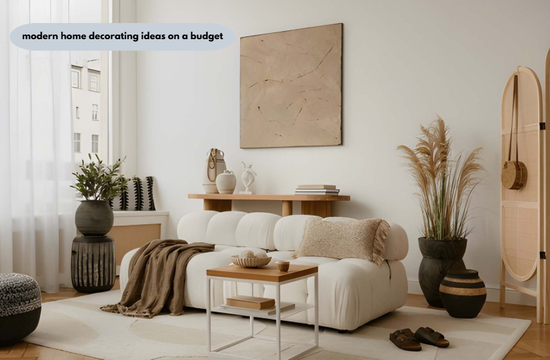
Small apartments benefit more from vertical space use and layered lighting than from new furniture, because floor space is the limiting factor, not furniture quality. Wall-mounted shelving, over-door hooks, and multi-tier lighting create the impression of more square footage without any structural changes. These small apartment decorating ideas on a budget work in studios and one-bedroom units alike.
- Add vertical storage. Wall shelves and over-door organizers free floor space without requiring new furniture.
- Layer lighting sources. Combine ceiling, floor, and table lighting instead of relying on one overhead fixture.
- Use mirrors strategically. A large mirror opposite a window reflects natural light and visually doubles a room’s depth.
- Choose multi-function furniture. Storage ottomans and fold-down desks reduce the number of separate pieces needed.
- Anchor with one rug. A single well-placed rug defines a seating area in an open-plan studio.
Room-by-Room Modern Home Decorating Ideas on a Budget
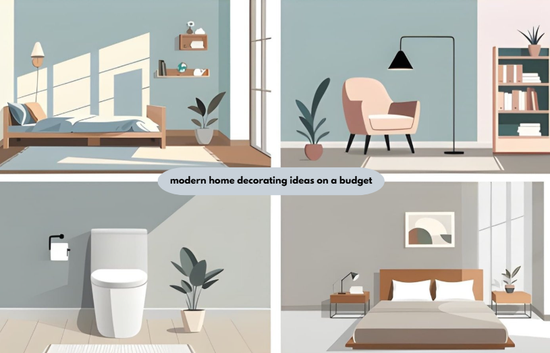
Living Room
A living room refresh gets the most visible impact from new lighting, a rug, and reupholstered or slipcovered seating rather than a full furniture replacement. Swapping a single overhead bulb for warm-toned layered lighting changes the room’s tone more than any single furniture purchase. Adding a patterned throw and two accent pillows completes the mid-impact tier of the 60/25/15 framework.
Bedroom
A bedroom refresh benefits most from new bedding, a statement headboard alternative, and updated nightstand lighting rather than a new bed frame. A large woven wall hanging or fabric panel behind the bed mimics the visual weight of a headboard at a fraction of the cost. Warm bedside lighting replaces the visual role an expensive new frame would otherwise play.
Kitchen
A kitchen refresh gets the most value from cabinet hardware swaps, open shelving, and a new light fixture rather than cabinet replacement. Swapping dated cabinet pulls for brushed brass or matte black hardware is one of the highest-return, lowest-cost changes in budget kitchen decorating. Open shelving in place of one upper cabinet door adds a modern, lighter visual effect.
Getting Personalized Help
Readers who want a plan built around their specific room dimensions and budget can contact DrHomey directly for tailored recommendations rather than relying on general guidance alone.
Frequently Asked Questions
How much does it cost to decorate a room on a budget?
A single-room budget refresh typically costs between $150 and $600 depending on room size and how many anchor items are replaced. Paint, lighting, and textiles make up most of that range. Full furniture replacement pushes costs significantly higher and falls outside true budget decorating.
What is the cheapest way to make a room look modern?
Repainting one accent wall and updating lighting fixtures is the cheapest way to modernize a room’s appearance. Both changes fall under $150 in most U.S. markets and affect the entire room’s visual tone rather than one isolated area.
Is it cheaper to decorate a small apartment or a large house?
A small apartment costs less to decorate in total dollars but often costs more per square foot due to fixed-price items like rugs and lighting. A $200 rug covers a much larger percentage of a 500-square-foot apartment’s floor space than the same rug in a house.
Should I buy new furniture or refresh what I have?
You should refresh existing furniture rather than buying new pieces because cosmetic updates like paint, hardware swaps, or slipcovers cost 60% to 80% less than new items. Full furniture replacement is only recommended when existing pieces are structurally damaged or unsafe.
What colors make a room look more expensive without spending more?
Warm neutral tones and deep, saturated accent colors read as higher-end than stark white walls, at the same cost per gallon of paint. The perceived cost difference comes from color choice and lighting pairing, not the paint’s price point.
How do I decorate an apartment I’m renting?
Renters can update lighting, hardware, and wall coverings using removable, non-damaging materials that don’t require landlord approval in most lease agreements. Peel-and-stick options for backsplashes and wallpaper panels allow visual changes without permanent alteration, though specific lease terms vary by property.
What’s the biggest mistake people make when decorating on a budget?
The most common mistake is spending 40% or more of the total budget on one furniture piece and leaving little for lighting or textiles. This produces a room with one expensive item and an otherwise unchanged, unfinished appearance.
Conclusion
Modern home decorating ideas on a budget work best when spending follows a plan rather than a shopping list. Allocating 60% of a budget to anchor items, 25% to mid-impact swaps, and 15% to contingency produces more visible, lasting change than spending the same total amount on one large furniture purchase.
