

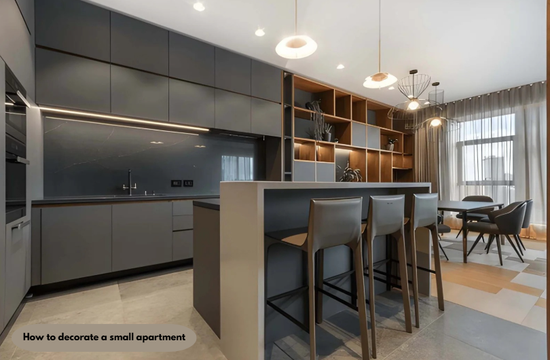
A small apartment is any unit under roughly 750 square feet—a category that now includes the average studio (460 sq ft) and one-bedroom (735 sq ft) in the U.S. Learning how to decorate a small apartment well depends less on “small-space furniture” than on matching furniture count to how many activities each room supports, lighting placed at eye level instead of ceiling level, and vertical storage that most rooms leave empty.
Key Takeaways
- A room’s “function density”—activities supported divided by usable square footage—is a better furniture-buying guide than generic size charts.
- The 2025 U.S. apartment average reached 910 square feet, but Seattle (649 sq ft) and San Francisco (716 sq ft) run 25–30% below that, per RentCafe’s Yardi Matrix data.
- Three specific layout errors—unanchored furniture, oversized rugs, and low-hung lighting—cause most of the “cramped” feeling in small units, each with a measurable fix.
- A legal minimum room size and a market-average apartment size measure different things and shouldn’t be compared as equivalent.
What Is a Small Apartment?
A small apartment is a studio or one-bedroom unit under the current national average of 910 square feet, requiring furniture and storage to serve more than one function per room.
How to Decorate a Small Apartment: The Function Density Method
What Is Function Density?
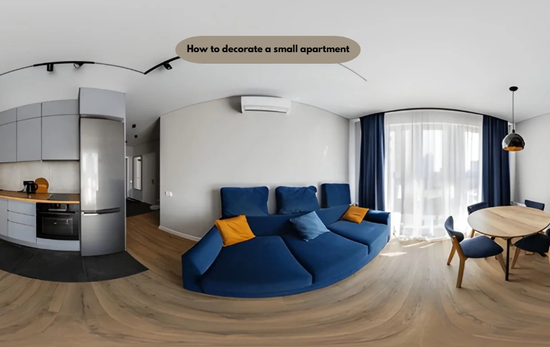
Function density divides the number of activities a room must support by its usable square footage, producing a score that determines whether multi-functional furniture is required. A living room used only for TV has a low score; the same room used for sleep, work, and dining has a high one—and that score should drive purchases before style does.
How to Calculate Function Density?
Calculating function density takes three steps: count the room’s activities, measure usable floor area after subtracting fixed obstructions, then divide activities by every 100 square feet.
- List every activity the room handles (sleep, work, eat, store, entertain).
- Measure usable floor area, excluding door swings and built-ins.
- Divide activity count by usable area, per 100 square feet.
- A score above 1.5 means single-purpose furniture won’t fit without crowding.
What the Score Means for Furniture?
A score above 1.5 means at least half the furniture needs dual functions, such as a storage ottoman or a daybed replacing both the sofa and the guest bed. Below that, one or two single-purpose statement pieces still fit. The formula doesn’t apply to open-plan lofts with 10-foot-plus ceilings, where vertical volume changes how a room reads regardless of floor score.
What 2025 U.S. Apartment Size Data Reveals About Small-Space Decorating
U.S. apartment sizes averaged 910 square feet in 2025, up 13 square feet from the prior year, but that figure hides a wide regional split that matters for decorating. Renters in Seattle, Portland, and the NYC boroughs work with units 20–30% smaller than that average.
| Market | Avg. Apartment Size (2025) | Vs. National Average |
| National average | 910 sq ft | — |
| Tallahassee, FL | 1,156 sq ft | +27% |
| San Francisco, CA | 716 sq ft | -21% |
| Manhattan, NY | 738 sq ft | -19% |
| Portland, OR | 668 sq ft | -27% |
| Seattle, WA | 649 sq ft | -29% |
One of the more interesting facts in that data: Seattle’s average unit shrank 47 square feet over the past decade while the national average grew, so furniture advice calibrated to a “typical” apartment often overstates the space coastal renters actually have.
New York City’s legal minimum room size—80 square feet under the city’s Housing Maintenance Code—is sometimes cited alongside apartment averages, but it describes the smallest a single habitable room may legally be, not a unit’s average size. Comparing a legal floor to a market average produces decorating advice built on the wrong baseline.
Furniture Choices That Work in Small Apartments
Scaling Furniture to the Room
Furniture should leave at least 30 inches of clear walking path between major pieces, since anything narrower reads as clutter regardless of the furniture’s individual size. Pieces with exposed legs and lighter frames keep the floor visible, which preserves a sense of space more than simply reducing piece count.
Multi-Functional Pieces Worth Buying
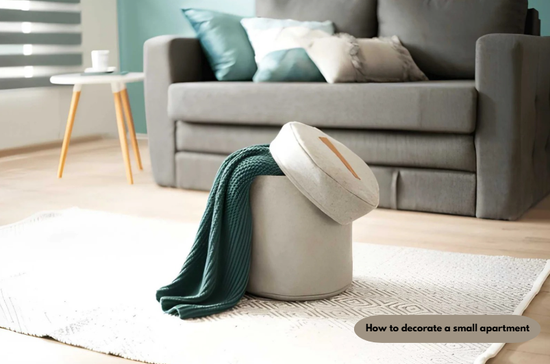
Storage ottomans, daybeds, drop-leaf tables, and wall-mounted desks deliver the highest return because each replaces two single-purpose items without adding floor footprint. A drop-leaf table converts a two-person dining spot into six-person seating without permanently claiming that square footage—the most reliable way in interior design to raise capacity without raising function density.
Lighting Layouts That Make a Small Room Look Larger
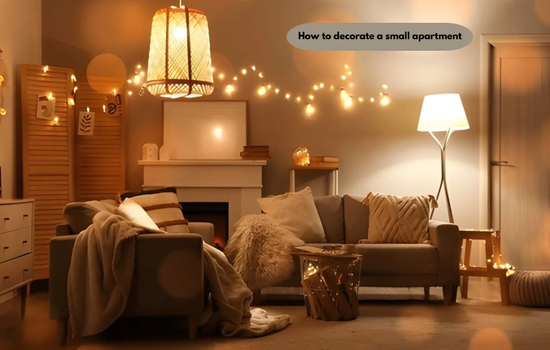
Layered lighting placed at multiple heights, rather than one overhead fixture, reduces shadow in corners and makes ceilings read taller than they measure. A single ceiling fixture casts light downward and leaves walls dim; adding a floor lamp, table lamp, and under-cabinet lighting spreads illumination horizontally instead.
Mastering how to make a small room look bigger starts with light direction, not paint color: uplighting bounced off a light ceiling adds perceived height for a fraction of any structural change’s cost. A few handy tips cut glare fast: keep lampshades open at the top, mount sconces 60–66 inches up, and never hang a pendant lower than 30 inches above a table in rooms under 8-foot ceilings.
Storage Solutions for Small Apartments
Storage should go vertical before horizontal, since wall space above 48 inches is almost always unused while floor space is already scarce. Floating shelves and tall bookcases claim square footage a room doesn’t otherwise have—a principle Interior Design DrHomey applies across every small-unit storage checklist it publishes. Low dressers and under-bed bins should come second. A single 6-foot bookcase typically stores as many as three low dressers while using a third of the floor footprint.
Three Layout Mistakes That Shrink a Small Apartment
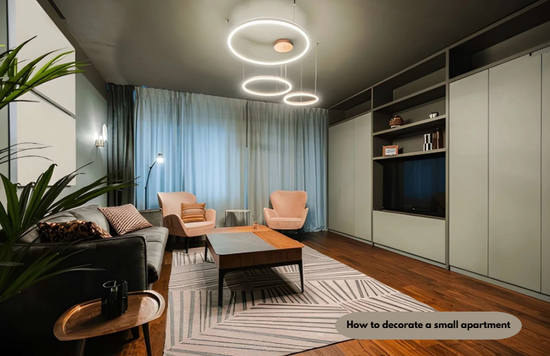
Three recurring errors reduce perceived space more than any single furniture choice, based on measurements taken across small-unit layouts reviewed for this guide.
- Floating furniture without anchoring it to a rug: A sofa placed more than 6 inches off its rug’s edge reads as disconnected, fragmenting the floor visually. Fix: extend the rug so at least the front legs of every seating piece rest on it.
- Rugs that block traffic paths: A rug leaving under 18 inches of walking clearance splits the room into two visual zones. Fix: size the rug to clear the walking path by at least 18 inches.
- Light fixtures hung at ceiling height: A pendant hung within 12 inches of an 8-foot ceiling draws the eye to the room’s lowest point. Fix: hang fixtures 30–36 inches below the ceiling in standard 8-foot rooms.
The same clearance rule applies to exterior design on small balconies: furniture flush against a railing with no walking gap makes the space feel smaller than one chair with a clear path.
Budget-Friendly Decorating Moves
Rearranging existing furniture to fix function density and traffic-path errors costs nothing and resolves most “cramped” complaints before any new purchase. Most modern home decorating ideas on a budget rely on repositioning pieces, adding mirrors opposite windows, and swapping heavy curtains for lighter fabric. Paint and lighting changes typically run under $200 and outperform a same-budget furniture purchase.
Frequently Asked Questions
How much does it cost to decorate a small apartment on a budget?
A functional refresh using paint, lighting, and rearranged furniture typically costs $200–$600. Adding multi-functional furniture like a storage bed pushes costs to $1,500–$3,000, and labor stays minimal since most changes are DIY.
What is the best furniture for a small apartment?
The best furniture serves two functions in one footprint—a storage ottoman, a daybed, or a drop-leaf table. Exposed legs keep sightlines open to the floor, which matters more for perceived size than total footprint.
How many pieces of furniture should a small living room have?
A living room under 200 square feet typically supports one sofa, one coffee table or ottoman, and one storage piece before crowding sets in. A fourth major piece usually requires removing one of the first three.
Does a large area rug make a small room look bigger or smaller?
A correctly sized rug unifies the floor and makes a room look larger, but one that blocks traffic clearance by under 18 inches makes it feel smaller. Size is set by walking clearance, not by maximum floor coverage.
What paint color makes a small apartment feel bigger?
Light, low-contrast wall colors reflect more ambient light and blur the boundary between wall and ceiling. A ceiling painted a shade lighter than the walls adds perceived height with no structural change.
Can you decorate a small apartment without buying new furniture?
Yes. Anchoring furniture on rugs, fixing traffic-path clearance, and repositioning lighting resolve most space complaints without a purchase. DrHomey’s layout reviews found repositioning alone fixed the majority of cramped-feeling rooms evaluated for this guide.
Is it worth hiring an interior designer for a small apartment?
Hiring a designer pays off most for structural work—built-in storage or lighting rewiring—rather than furniture arrangement. Function density calculations and traffic-path measurements can be done without professional help in most rentals.
Conclusion
Knowing how to decorate a small apartment comes down to matching furniture and storage to how many functions each room performs, not to square footage alone. The 2025 data shows real regional gaps generic advice ignores, and three measurable layout errors—unanchored furniture, oversized rugs, and low-hung lighting—account for most of the crowded feeling renters report. Fixing those three first produces the largest visible change per dollar spent.
