
The best goldfish plant varieties for room styling are Nematanthus gregarius for modern or mid-century rooms, ‘Tropicana’ for boho spaces, ‘Golden West’ for Scandinavian homes, and Columnea gloriosa for traditional or moody looks. Choose by leaf color and how it grows, then make sure the room gets bright, indirect light.
Key Takeaways
- Two plant groups share the goldfish plant name: Nematanthus, with glossy compact growth, and Columnea, with soft leaves and long trailing stems.
- Compact Nematanthus types suit shelves, desks, and clean-lined modern rooms.
- Trailing Columnea types suit hanging baskets in layered, traditional, and farmhouse rooms.
- Every variety needs bright, indirect light to bloom, so the window matters more than the decor style.
- Cold glass, heat vents, and pots without drainage cause most failures in styled rooms.
What Is a Goldfish Plant?
A goldfish plant is a tropical, trailing gesneriad whose small, puffed, tube-shaped flowers look like tiny goldfish leaping along its stems.
Nematanthus has thick, waxy leaves and a tidy, mounding habit. Columnea has softer, often fuzzy leaves and stems that cascade well past the pot. That difference in texture and shape decides which room each variety belongs in. In color-rich rooms, its warm orange blooms sit comfortably beside Hispanic flowers like dahlias and zinnias.
Which Goldfish Plant Varieties Work Best for Interior Design?
The six most useful goldfish plant varieties for styling are classic Nematanthus gregarius, ‘Tropicana,’ ‘Golden West,’ ‘Black Magic,’ Columnea gloriosa, and Columnea ‘Krakatau. ‘ Each one pairs with a room style based on leaf color, flower color, and how far it trails.
| Variety | Leaf and flower look | Best room style | Best placement | Source |
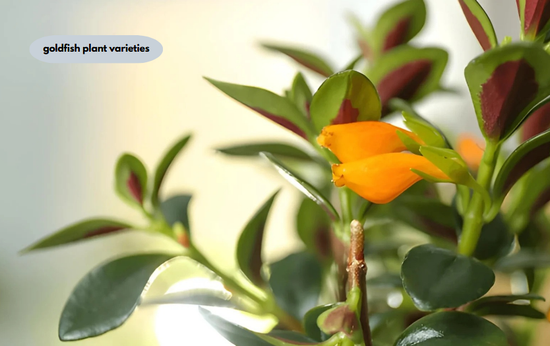
| Nematanthus gregarius | Shiny dark green foliage and vivid orange blooms; at maturity, roughly 1.5 feet tall with a spread of about 3 feet. | Mid-century modern, modern | Low credenza or wall shelf | NC State Extension, Plant Toolbox: Nematanthus gregarius |
| Nematanthus ‘Tropicana’ | Glossy leaves, yellow flowers striped with red-orange | Boho, eclectic | Macramé hanger or rattan stand | None (design guidance) |
| Nematanthus ‘Golden West’ | Leaves edged in cream and gold, orange flowers | Scandinavian, minimalist | Pale ceramic pot on a window-side shelf | None (design guidance) |
| Nematanthus ‘Black Magic’ | Very dark leaves, orange flowers | Contemporary, dark, and moody | Matte black planter beside the brightest window | None (design guidance) |
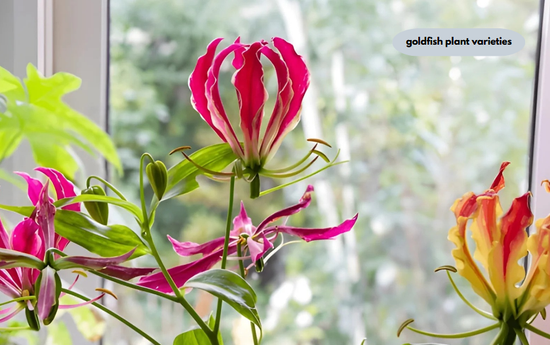
| Columnea gloriosa | Soft, hairy, purplish leaves; red flowers with yellow throats; long trails | Traditional, cottage | Hanging basket in a bay window | None (design guidance) |
| Columnea ‘Krakatau’ | Dark glossy leaves, coral-orange flowers | Modern farmhouse, coastal | Wall bracket in a kitchen or breakfast nook | None (design guidance) |
Read the table the way interior design pros read any plant: leaf first, flower second. Flowers come in flushes, while the leaves are on display every day, so foliage carries most of the visual weight in a room.
How Do You Match a Goldfish Plant to Your Room Style?
Match the plant’s texture to the room’s surfaces: glossy, compact Nematanthus suits smooth, clean-lined rooms, and soft, trailing Columnea suits layered rooms with patterns and wood. Flower color is the second filter.
Goldfish plant varieties earn their spot by repeating a color or texture already in the room. Each pairing below follows the same rule used across interior design by drhomey: start with the room’s materials, then choose the plant.
Modern and Mid-Century Rooms
Classic Nematanthus gregarius works best here because its orange blooms echo the warm tones of walnut and teak. Set it in a tapered ceramic pot on a low credenza so its mounded shape repeats the horizontal lines of mid-century furniture.
Scandinavian and Minimalist Rooms
‘Golden West’ adds pattern without clutter, since the variegation lightens the leaf mass against white walls. One plant in a matte white or pale wood pot is enough; a cluster of three reads as busy in a sparse room.
Boho and Eclectic Rooms
‘Tropicana’ fits best because its striped flowers hold their own beside layered textiles, rattan, and mixed prints. A macramé hanger lets the stems spill freely, which suits the relaxed look.In a hacienda or Spanish-revival room, pair it with Mexican flowers such as marigolds in a painted Talavera pot to repeat the same warm orange.
Traditional, Farmhouse, and Coastal Rooms
Columnea gloriosa softens formal molding and heavy drapery with long, velvety trails in a bay window. In a farmhouse kitchen or coastal breakfast nook, ‘Krakatau’ gives the same cascade with glossier leaves that pair well with shiplap and white tile. If the window looks out on cypress trees or other dense evergreens, their shade cuts indoor light, so hang the basket in the brightest unshaded window instead.
Dark and Moody Rooms
‘Black Magic’ is the strongest choice because its dark leaves blend into charcoal or deep green walls, so the orange flowers appear to float. In a dark room, put the pot beside the brightest window, since deep paint reflects little light back onto the leaves.
Where Should You Place a Goldfish Plant in Each Room?
Place every goldfish plant within a few feet of an east-facing window, or set it back from a south or west window so it gets bright light without hours of direct afternoon sun. Style decides the pot; the window decides whether the plant blooms.
Light is the first filter for styling. Cold is the second. The NC State Extension Plant Toolbox lists 50°F as the lowest temperature the goldfish plant can handle. On winter nights, slide the pot back from the window so no leaves are in contact with the glass, which runs much colder than the room air.
Use this order to place one in any room:
- Check the brightest window at midday and confirm it gives strong light without harsh sun resting on the leaves for hours.
- Choose your form: compact Nematanthus for shelves and tabletops, or trailing Columnea for hanging baskets.
- Keep the plant in its plastic nursery pot with drainage holes, and slip it inside a decorative pot one size larger.
- Keep it at least 3 feet from radiators, heat registers, and AC vents.
- Group it with other plants or set it on a pebble tray to raise humidity around the leaves.
- Turn the pot a quarter turn each week so growth stays even on every side.
Worked Example: How High Should You Hang a Trailing Goldfish Plant?
Hang a trailing goldfish plant so the basket base sits near eye level for watering and the trail tips end above furniture, not in a walkway. Here are the facts and math for a standard 8-foot ceiling:
- Ceiling height: 96 inches
- Hook and chain drop: 12 inches
- Hanger length: 12 inches
- Basket depth: 8 inches
- Basket base: 96 − 12 − 12 − 8 = 64 inches from the floor
- Tips of a 24-inch Columnea trail: 64 − 24 = 40 inches from the floor
A 64-inch basket base sits close to adult eye level, so you can check soil moisture without a step stool. Trail tips at 40 inches brush an adult’s hip in a walkway, so hang that basket over a sofa arm, window seat, or sideboard. In a hallway or narrow kitchen path, switch to a compact Nematanthus on a wall shelf.
What Are the Most Common Goldfish Plant Styling Mistakes?
The three most common mistakes are using the plant as a dark-corner accent, sealing it in a pot without drainage, and hanging it near a vent. Each one stops flowering within a season.
These tips apply to every variety in the table above.
Mistake 1: Dark-corner styling. It happens because the plant looks sculptural in photos. Low light produces long, bare stems and no flowers.
Fix: move it to the window and style the corner with a low-light plant like a ZZ plant.
Mistake 2: A cachepot with no drainage. Solid ceramic and brass planters look polished, but water pools at the bottom and the plant’s fine roots, built to cling to tree bark, rot quickly.
Fix: keep the nursery pot inside and pour off standing water 15 minutes after watering.
Mistake 3: Vent placement. High shelves near ceiling vents look tidy but blast the leaves with dry, moving air.
Fix: Check where every supply vent points before you mount a bracket.
Are Goldfish Plants Easy to Buy for Home Decor Right Now?
Yes, flowering houseplants are easier to find than they were a year ago, so you can shop by named goldfish plant varieties instead of taking whatever is in stock. Most comprehensive guides skip the plant tag, but it is the first thing to read before you buy.
The USDA National Agricultural Statistics Service’s 2025 Floriculture Crops report puts potted flowering plant sales at $1.41 billion in 2025, up from $1.25 billion in 2024, for growers with $100,000 or more in sales. That works out to a gain of about 12% in one year. More stock also means more unlabeled hybrids, so look for the genus and cultivar name on the tag and skip pots marked only with a common name.
When Does Room Style Not Matter?
Room style stops mattering in a space with no window brighter than a north exposure, such as a basement media room or an interior bathroom. When designing a room like this, light is the only variable, so choose any compact Nematanthus and run a full-spectrum LED grow light on a timer for 12 to 14 hours a day, mounted about 12 inches above the leaves. Style the light fixture and the pot instead of choosing a variety by color.
Frequently Asked Questions
Which goldfish plant variety blooms the most indoors?
Nematanthus gregarius and its hybrids bloom most reliably in typical homes. Their waxy leaves cope with average indoor humidity better than Columnea’s softer leaves, and they set buds readily in bright, indirect light.
Are goldfish plants safe for cats and dogs?
Nematanthus types are considered pet-safe, but Columnea types lack the same official rating. The ASPCA’s Toxic and Non-Toxic Plants list rates the plant non-toxic to cats and dogs under the older name Hypocyrta nummularia, which is now grouped with Nematanthus. Check the genus on the tag before placing a fuzzy-leaved Columnea within a pet’s reach.
Can a goldfish plant live in a bathroom?
Yes, a goldfish plant does well in a bathroom with a window that gives bright, indirect light. Shower steam raises humidity, which helps both genera, but a windowless bathroom needs a grow light.
How big does a goldfish plant get indoors?
Nematanthus stays compact enough for a shelf or tabletop, while Columnea grows long, trailing stems. Cut leggy stems back by about a third in early spring to keep either type full and sized to its spot.
Why is my goldfish plant not blooming?
Too little light is the most common reason a goldfish plant stops blooming. Move it closer to an east window, water a little less in winter, and feed it with a diluted bloom fertilizer from spring through fall.
Conclusion
The right goldfish plant varieties make a room look finished only when leaf texture, flower color, and window light line up. Choose glossy, compact Nematanthus for clean-lined rooms and trailing Columnea for layered ones. Then let the brightest window, not the paint color, decide where the pot goes.