
Hispanic flowers such as dahlias, marigolds, poinsettias, and bougainvillea bring color and cultural meaning to a home when you use them in three layers: palette, pattern, and real floral accents. Choose one lead flower, pull two or three colors from it, and repeat them across walls, textiles, and arrangements.
Key Takeaways
- The dahlia is the national flower of Mexico, and its layered petals work as both a printed motif and a centerpiece.
- A 60-30-10 split keeps bold floral color in check: 60% warm neutral, 30% supporting earth tone, and 10% bright bloom color.
- Otomi embroidery and Talavera tile carry floral motifs into rooms where fresh flowers would fade.
- Potted poinsettias and orchids last longest indoors when kept out of drafts and away from heat registers.
- One saturated lead color per room stops a mix of folk patterns from looking cluttered.
What Are Hispanic Flowers in Interior Design?
Hispanic flowers in interior design are blooms native to, or closely tied to, Spanish-speaking cultures that a home uses as color sources, pattern motifs, and living accents.
The style draws from Mexico, Central and South America, Spain, and the Caribbean. The U.S. Census Bureau’s 2026 Hispanic Heritage Month release counts 70.1 million Hispanic residents on July 1, 2025, about 21% of the population. That reach means Talavera and embroidered textiles now sell nationwide, so shop for artisan-made pieces over mass-produced theme décor.
Which Hispanic Flowers Work Best Indoors?
Dahlias, marigolds, poinsettias, bougainvillea, and orchids work best because each has a signature color and a shape that reads clearly in fabric or a vase. Match each one to the room’s light, then use the care tips in the last column to keep real blooms looking fresh.
| Flower | Cultural tie | Signature colors | Best indoor use | Care note |
| Dahlia | National flower of Mexico | Coral, wine, blush | Dining centerpiece, large-scale wallpaper | Recut stems and change water every two days |
| Marigold (cempasúchil) | Día de Muertos altars | Saffron, tangerine | Entry garland, fall mantel | Dry whole heads for garlands that outlast fresh blooms |
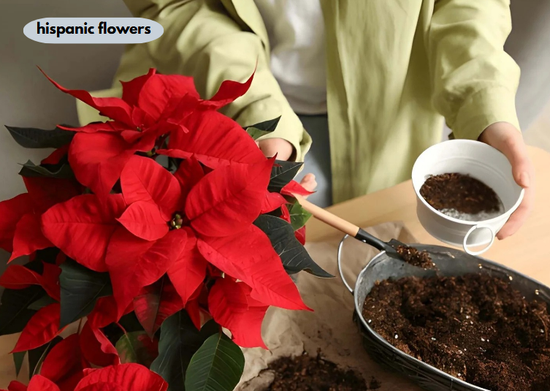
| Poinsettia (flor de nochebuena) | Native to Mexico, Christmas season | Red, cream, deep green | Winter grouping near a bright window | Keep out of drafts and away from heat vents |
| Bougainvillea | Courtyards across Latin America and Spain | Magenta, fuchsia, coral | Printed fabrics, sunroom vine | Needs strong sun, so use it as pattern in dim rooms |
| Orchid (Cattleya, monja blanca) | National flowers of Colombia and Guatemala | Lavender, white, plum | Bedroom or bath shelf in filtered light | Let roots dry between waterings |
For 2025, USDA’s National Agricultural Statistics Service found growers selling $100,000 or more sold $1.41 billion in potted flowering plants, compared with $389 million in cut flowers. That works out to about $3.60 of potted plants for every $1 of cut stems, so expect a wider selection of potted poinsettias and orchids than of specialty cut dahlias, and plan centerpieces around what your garden center stocks.
What Color Palettes Come From Hispanic Floral Traditions?
Four palettes cover most homes: marigold with terracotta, bougainvillea magenta with white, Talavera cobalt with sunflower yellow, and poinsettia red with deep green.
In interior design by drhomey, the palette starts with the flower, then moves to paint. Assign the colors by their share of the room:
- Pick the lead flower and name its brightest color, such as marigold orange.
- Choose a 60% base from the flower’s quietest tone, such as warm white or pale clay, for most walls and large furniture.
- Choose a 30% supporting color, such as terracotta, for an accent wall, rug, and curtains.
- Hold the brightest color to 10%: pillows, a ceramic vase, and the real flowers.
- Add one cool contrast, like cobalt or leaf green, in a single small object.
Worked Example: Painting a 12-by-14-Foot Living Room
A 12-by-14-foot room with 8-foot ceilings needs 2 gallons of base color and 1 gallon of terracotta for one accent wall.
The perimeter is 52 feet, so the walls total 52 × 8 = 416 square feet. Subtracting a 3-by-7-foot door (21 square feet) and two 3-by-5-foot windows (30 square feet) leaves 365 square feet. The 14-foot accent wall takes 112 of those, leaving 253 square feet for the base color.
Sherwin-Williams’ paint calculator puts one gallon at roughly 350 to 400 square feet and one quart at about 100. Two coats of base color total 506 square feet, or 1.3 to 1.5 gallons, so buy 2. Two coats on the accent wall total 224 square feet, just over 2 quarts, so one gallon covers it with paint to spare.
How Do You Use Floral Patterns Without Overdoing It?
Use one large-scale floral pattern per room and support it with solids and small geometric prints. Pattern scale matters more than the number of colors.
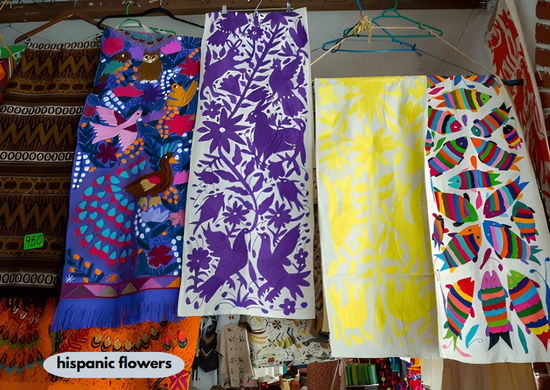
Otomi embroidery from Hidalgo, Mexico, stitches playful flowers and animals on white cloth, making a lovely headboard or framed panel. Talavera tile from Puebla and Tlaxcala adds cobalt or multicolor florals to a backsplash, stair risers, or a row of planters.
The best advice on designing with folk patterns is to let one handmade piece lead. Many style guides push matched sets, but other prints should stay smaller and repeat the lead piece’s colors.
The Common Mistake: Theme Overload
The most frequent error is combining papel picado colors, serape stripes, Talavera blue, and bright florals in one room. It happens because shoppers buy by theme instead of by palette.
The fix is a color filter: buy only items that share a color with your lead flower, and limit stripes to one small textile.
Where Should Floral Accents Go in Each Room?
Put real flowers where people gather, and use printed florals where light is low or humidity is high. These placement tips fit most American homes:
- Entry: a marigold garland or a clay pot of dried flowers on the console.
- Living room: a dahlia arrangement under 14 inches tall, so it doesn’t block faces across the coffee table.
- Dining room: a low bowl of dahlias or small potted poinsettias in winter.
- Kitchen: Talavera tile behind the range.
- Bedroom and bath: an Otomi panel as a headboard, and an orchid in bright, filtered window light.
What Are Some Interesting Facts About Hispanic Flowers?
Several flowers in Latin American decor have surprising backstories, and these interesting facts help you choose pieces for meaning.
- Those red “petals” on a poinsettia? They’re actually bracts, just leaves in disguise.
- Calla lilies became famous through Diego Rivera’s paintings, though surprisingly, they’re actually native to southern Africa.
- Cuba’s national flower, the white mariposa, is really a Himalayan import.
- During Día de Muertos, people line paths and altars with marigolds, trusting their color and scent to lead spirits home.
When Does This Advice Not Apply?
The paint-first method does not fit renters with no-paint leases or families who keep marigolds for Día de Muertos. Renters should move the 60-30-10 split into rugs, curtains, bedding, and removable wallpaper while keeping the same color shares. Families who build an ofrenda should save real marigold garlands for the early-November observance and use marigold-colored textiles the rest of the year.
Frequently Asked Questions
What flowers are traditional in Hispanic culture?
Dahlias, marigolds, poinsettias, bougainvillea, and orchids are the flowers most closely tied to Hispanic traditions. Marigolds mark Día de Muertos, and poinsettias mark Christmas.
What is the national flower of Mexico?
The dahlia is the national flower of Mexico. Its range from blush to deep wine suits both arrangements and printed fabric.
What colors go with Mexican-inspired decor?
Terracotta, marigold orange, cobalt blue, magenta, and warm white pair best with Mexican-inspired decor. Ground the room in a warm neutral and let one saturated color lead.
Can Hispanic floral decor work in a modern home?
Yes, if you limit it to one strong pattern and one bright color in a clean-lined room. An Otomi panel over a low sofa fits modern spaces well.
How do you keep a poinsettia healthy indoors?
Give it bright indirect light, normal room temperature, and water only when the soil surface feels dry. Drafts and heat registers cause early leaf drop.
Conclusion
Hispanic flowers give a home a palette with roots: dahlia coral, marigold gold, bougainvillea pink, and Talavera blue. Pick one star flower, divide colors 60-30-10, and let one handmade pattern shine. DrHomey’s rule is simple: measure the walls, buy only the paint the math calls for, and spend the difference on fresh flowers.