

Choosing the right cookware can make everyday cooking easier and more enjoyable. A pure titanium pan stands out for its strong construction, lightweight feel, and simple design. For people looking for durable cookware without unnecessary coatings, titanium can be an interesting option.
However, cookware should be selected based on cooking habits, maintenance needs, and the type of food prepared regularly. Understanding the material, its benefits, and its limitations can help shoppers make a more informed choice.
What Is a Pure Titanium Pan?
A pure titanium pan is cookware made primarily from titanium rather than a traditional coated cooking surface. Titanium is known for its high strength-to-weight ratio, which allows cookware to remain relatively light while offering durable construction.
Unlike many nonstick pans that depend on a separate coating, an uncoated titanium cooking surface does not rely on a synthetic nonstick layer. This distinction can appeal to cooks who prefer straightforward cookware materials.
Understanding Titanium Cookware
Titanium is a strong metal that is widely used in industries where durability and low weight matter. In cookware, its material properties make it suitable for people who value sturdy construction and easy handling.
The exact performance of a pan depends on its design, thickness, handle, cooking surface, and manufacturing quality. Therefore, the term titanium alone does not describe every aspect of a pan’s cooking performance.
Pure Titanium vs. Coated Cookware
Many traditional pans use coatings to create a smooth, low-stick cooking surface. A pure titanium pan can offer a different approach because the cooking surface does not depend on a conventional nonstick coating.
That does not mean titanium automatically makes food impossible to stick. Cooking technique, temperature, ingredients, and proper preheating still influence the cooking experience.
Key Benefits of a Pure Titanium Pan
A quality titanium pan can offer several practical advantages for everyday kitchens. Its combination of strength, relatively low weight, and straightforward material construction makes it attractive to many home cooks.
At the same time, shoppers should look beyond marketing claims. Pan design and manufacturing quality can have a major effect on how cookware performs in real kitchens.
Lightweight and Strong Construction
Titanium is valued for its strength relative to its weight. This can make a titanium pan easier to lift, move, and handle than some heavier cookware options.
The lighter construction can be especially useful when preparing meals that require frequent movement of the pan. A sturdy handle and balanced design can further improve everyday comfort.
Durable Cooking Surface
Durability is one of the main reasons people consider titanium cookware. A well-made pan can provide long-term use when it receives appropriate care.
Because pure titanium cookware does not depend on a conventional nonstick coating, there is no coating layer of that type to wear away during normal use. Still, the surface can develop marks or discoloration over time.
Durability matters most when cookware is used every day.
Cooking With a Pure Titanium Pan
Using titanium cookware effectively requires understanding how the pan responds to heat. Unlike heavily coated nonstick cookware, an uncoated surface may require more attention to temperature and cooking technique.
Preheating the pan and adding an appropriate amount of cooking fat can help reduce sticking. Lower or moderate heat may also be useful for foods that are more likely to stick.
Preparing the Pan Before Cooking
A clean pan should be properly heated before ingredients are added. Adding food to a cold surface can produce a different cooking experience than starting with a properly preheated pan.
Cooks should also avoid unnecessarily high temperatures. Controlling heat can help improve cooking consistency and reduce the chance of food becoming stuck to the surface.
Foods That Work Well
A titanium pan can be useful for many everyday cooking tasks, including sautéing vegetables, preparing meats, cooking eggs with appropriate technique, and making simple one-pan meals.
Foods with a natural tendency to stick may require extra care. Using enough cooking fat and managing temperature can make the process easier.
How to Care for Titanium Cookware
Proper care can help maintain the appearance and performance of cookware. A titanium pan should be cleaned after use according to the manufacturer’s recommendations.
Gentle cleaning methods are generally preferable when maintaining a cookware surface. Avoiding unnecessary harsh treatment can help preserve the pan’s finish.
Cleaning After Each Use
Allow the pan to cool to a safe temperature before cleaning. Food residue can often be removed with warm water and a suitable dishwashing method.
For stubborn residue, soaking can help loosen food before cleaning. Using appropriate utensils and cleaning materials can also reduce unnecessary surface marks.
Storing the Pan Properly
Storage is another simple part of cookware care. If several pans are stacked together, placing a protective layer between them can help reduce scratches and contact marks.
Keeping cookware dry and storing it in a clean cabinet or on a suitable rack can also help maintain its condition over time.
Is a Pure Titanium Pan Right for Every Kitchen?
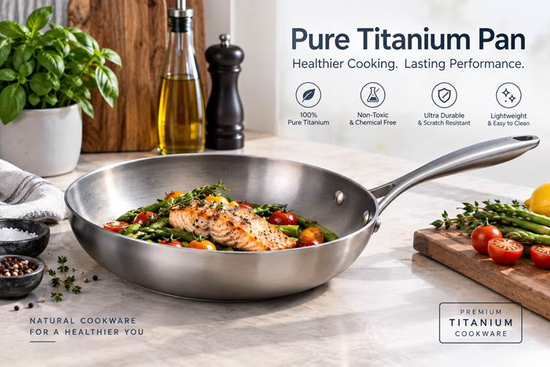
No single type of cookware suits every cooking style. A pure titanium pan may appeal to cooks who prioritize durable materials, lighter cookware, and a coating-free cooking surface.
However, people who want effortless nonstick performance may prefer cookware specifically designed with a nonstick coating. Titanium cookware can require more attention to temperature and cooking technique.
The best choice depends on the cook’s priorities rather than simply the material name printed on the packaging.
What to Look for When Buying a Pure Titanium Pan
Shopping for titanium cookware requires attention to more than appearance. Buyers should check the construction, material description, dimensions, handle design, compatibility, and care instructions before making a purchase.
It is also important to understand whether a product is made from pure titanium or uses titanium as only one part of a layered or composite construction.
Check the Material Details
Product descriptions should clearly explain the materials used in the pan. Terms such as titanium-coated, titanium-reinforced, and pure titanium can describe different products.
Reading the manufacturer’s specifications can help shoppers understand what they are actually buying. Clear material information also makes it easier to compare different cookware products.
Consider Size and Cooking Needs
Pan size should match the meals that are normally prepared. A smaller pan can work well for individual portions, while a larger pan may be more useful for family cooking.
The handle, weight, shape, and storage requirements should also be considered. Practical design can make a noticeable difference during everyday use.
Frequently Asked Questions
1. What is a pure titanium pan?
A pure titanium pan is cookware made primarily from titanium. It is generally valued for titanium’s strength-to-weight properties and for a cooking surface that does not rely on a conventional nonstick coating.
2. Is a pure titanium pan nonstick?
Pure titanium itself should not automatically be considered naturally nonstick. Cooking technique, heat control, and the use of cooking fat can affect how easily food releases.
3. Is titanium cookware durable?
Titanium is known for its strength and durability. However, overall cookware durability also depends on the pan’s construction, thickness, design, and quality.
4. How should a pure titanium pan be cleaned?
The pan should be cleaned according to the manufacturer’s care instructions. Gentle cleaning and removing food residue soon after cooking can help maintain its condition.
5. Can a pure titanium pan be used every day?
Yes, a quality titanium pan can be suitable for regular cooking. Its usefulness depends on the cook’s preferred foods, cooking methods, and expectations for surface performance.
6. Does a pure titanium pan need cooking oil?
Using cooking oil or another suitable cooking fat can help improve food release on an uncoated surface. The amount needed depends on the food and cooking method.
7. What should buyers check before purchasing titanium cookware?
Buyers should check the material composition, construction, size, handle design, cooking compatibility, and care requirements. They should also determine whether the pan is pure titanium or simply titanium-coated.
8. How long can titanium cookware last?
There is no single lifespan for all titanium cookware. Proper construction and regular care can contribute to long-term use, but durability varies between products.
Conclusion
A pure titanium pan can be an appealing cookware option for people who value strength, lighter handling, and a straightforward material design. Its coating-free surface offers a different cooking experience from traditional nonstick cookware, while its durable construction can support regular kitchen use.
Before choosing one, shoppers should consider their cooking habits, preferred foods, cleaning routine, pan size, and expectations for food release. Paying attention to material specifications and overall construction can help ensure the cookware matches everyday needs.
