

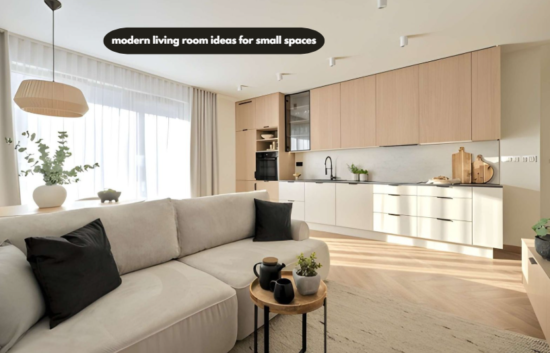
If you’ve ever stood in your living room wondering why it feels like the walls are closing in, you’re not alone. The good news is that square footage isn’t really the enemy here; it’s how that footage gets used. These modern living room ideas for small spaces focus on scale, sightlines, and smart furniture choices so the room breathes even when it’s tight on inches.
What Makes a Small Living Room Feel Cramped?
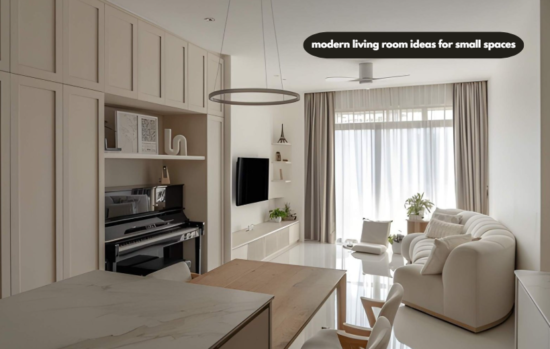
A small living room feels cramped when oversized furniture, heavy fabrics, and blocked sightlines interrupt the flow of the space, not because the square footage itself is too limited. The fix usually has more to do with proportion and placement than with the room’s actual dimensions.
Why does my small living room feel so small?
Your living room probably feels small because the furniture is scaled for a bigger room and it’s fighting the walls for space.
This is one of the most common mixups homeowners make. A deep sectional or an oversized coffee table might look great in a showroom, but drop it into a 12-by-14 room and it eats every inch of visual breathing space. Rooms feel larger when there’s a clear path from the doorway to the seating area and when your eye can travel across the floor without hitting a wall of furniture first.
What furniture makes a room look smaller?
Bulky, low-slung pieces with solid, heavy frames make a small room look smaller because they block light and visually anchor the floor.
Think chunky wooden armoires, deep armchairs with thick upholstered arms, and coffee tables with solid bases instead of open legs. Swapping these for pieces with exposed legs lets light travel underneath the furniture, which tricks the eye into reading more open floor space than actually exists.
What Are the Best Modern Living Room Ideas for Small Spaces?
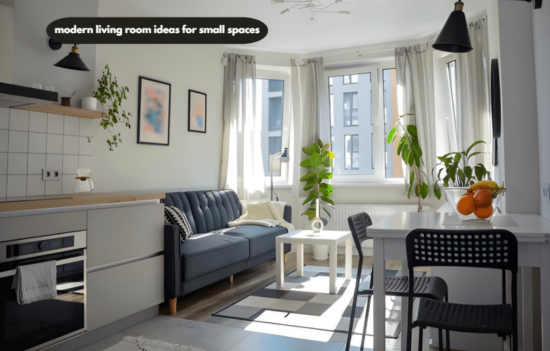
These modern living room ideas for small spaces work whether you’re furnishing a studio apartment or a small den off the kitchen, and they break down into a few simple categories.
Which furniture choices make a small living room feel bigger?
The right furniture shapes and heights open up a small room more than almost anything else in the space.
- Choose a low-profile sofa instead of a traditional high-back model since anything under 30 inches tall keeps the ceiling line feeling open
- Pick a sofa with exposed wooden or metal legs so light can pass underneath it
- Choose a round or oval coffee table over a rectangular one so there are no sharp corners eating into your walking path
- Add a nesting table set that can expand for guests and tuck away when you need the floor space back
- Choose multi-functional seating like a storage ottoman that doubles as a coffee table and extra seating when guests come over
How do color and light affect a small living room’s size?
Light travels further in a room built around soft tones and reflective surfaces, which makes the whole space read as larger than it is.
- Stick to a light, monochromatic color palette since rooms painted in soft neutrals or whites reflect more ambient light than dark, saturated walls
- Hang curtains close to the ceiling rather than right above the window frame, which draws the eye upward and makes the wall feel taller
- Add a large mirror opposite the main window to double the perceived light and visually extend the room
- Choose sheer or light-colored window treatments that let daylight flood in rather than heavy blackout drapes
- Keep your walls and largest furniture piece within the same tonal family so the eye doesn’t register hard visual breaks across the room
What storage and décor tricks free up floor space?
Storage that climbs the wall instead of spreading across the floor keeps a small living room feeling open underfoot.
- Use vertical shelving instead of wide bookcases to store books and décor without eating into floor space
- Install floating shelves in unused corners for display space that doesn’t touch the ground
- Use a slim console table behind the sofa if it’s floating in the room, which adds storage without adding bulk
- Layer in a single oversized rug rather than several small ones since one continuous rug makes the floor read as unified instead of broken up
- Hang one large statement art piece at eye level instead of a cluttered gallery wall since a single focal point reads as more intentional in a tight room
For instance, swapping out a bulky, solid-wood coffee table for a set of glass nesting tables in a 120-square-foot living room instantly opened up the sightlines, making the walkway feel completely unobstructed without sacrificing surface space.
For Toronto homeowners clearing out furniture that didn’t make the cut during this kind of edit, self storage units toronto offer a practical place to keep pieces you’re not ready to part with permanently while you test how the room feels without them.
Multi-Functional Furniture vs. Traditional Furniture: Which Is Better for Small Spaces?
Multi-functional furniture tends to outperform traditional furniture in small living rooms because it solves storage and seating needs simultaneously, though it usually costs more upfront and offers less customization down the line.
| Factor | Multi-Functional Furniture | Traditional Furniture |
| Space efficiency | High, serves two or more purposes | Low, single-purpose only |
| Upfront cost | Higher per piece | Lower per piece |
| Flexibility over time | Limited, harder to reconfigure | Easier to swap and rearrange |
| Best for | Studios, apartments under 700 sq ft | Larger or open-concept rooms |
Is multi-functional furniture worth it for small rooms?
Yes, multi-functional furniture is generally worth the investment in small rooms because it reduces the total number of pieces needed, which keeps the floor plan open.
A storage ottoman, a sleeper sofa, or a lift-top coffee table each replace what would otherwise be two or three separate items. That said, if your space allows for even modest separation between a seating area and a storage zone, traditional furniture gives you more freedom to update pieces individually as your style changes, which is a real trade-off worth weighing before you buy.
How Much Does It Cost to Redesign a Small Living Room?
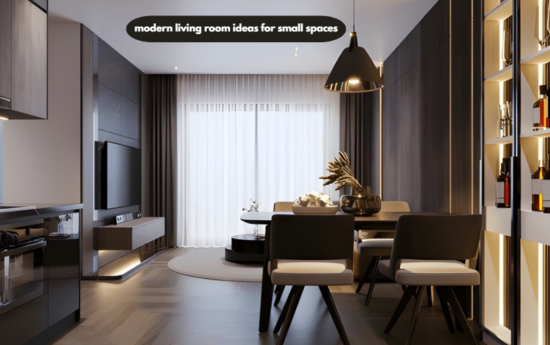
A small living room redesign typically runs anywhere from a few hundred dollars for a cosmetic refresh to several thousand for new furniture, paint, and lighting, depending on how much you’re replacing versus rearranging.
What’s a realistic budget for a small living room makeover?
A realistic budget for a full small living room makeover falls somewhere between $1,500 and $5,000, covering a sofa, rug, lighting, and paint.
Costs shift a lot depending on whether you’re buying new furniture outright or reworking what you already own. Paint and lighting changes alone, which cost relatively little, can shift how open a room feels more than people expect.
What are the cheapest ways to make a small living room look bigger?
The cheapest way to make a small living room look bigger is to declutter, repaint in a lighter shade, and rehang curtains higher on the wall, all of which cost under $200 combined.
A lot of interior design drhomey enthusiasts point out that decluttering alone, without spending a dollar, is often the single biggest visual upgrade a small room can get. Removing even two or three unnecessary pieces frees up sightlines instantly.
Common Small Living Room Mistakes and How to Fix Them
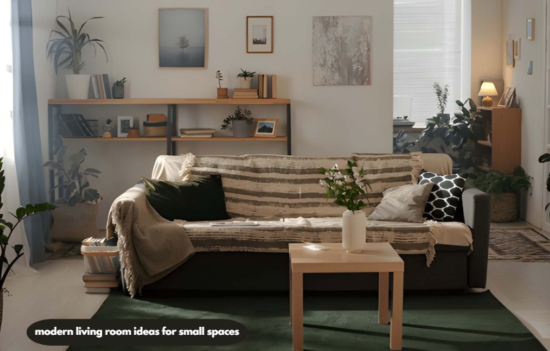
Even well-intentioned small space design goes sideways sometimes, and it’s usually one of a handful of repeat offenders.
Why does my living room still feel cramped after decorating?
Your living room probably still feels cramped after decorating because you added more decorative objects than the room’s proportions can handle, not because the furniture itself is wrong.
Small rooms need editing more than they need additions. Every extra throw pillow, side table, or wall hanging adds visual noise, and in a tight space that noise accumulates fast.
How do I fix a small living room with too much furniture?
Fix a small living room with too much furniture by removing one piece entirely rather than trying to rearrange everything around it.
Start with whichever item blocks the natural walking path between the doorway and the seating area. According to several drhomey handy tips shared by professional stagers, pulling furniture at least a few inches away from the walls, rather than pushing everything flush against them, actually makes a room read as larger because it creates a sense of depth.
Frequently Asked Questions
What color makes a small living room look bigger?
Light neutrals like soft white, warm greige, and pale sage reflect the most natural light and make walls feel like they’re receding rather than closing in.
Should I use a small rug or a big rug in a small living room?
A big rug that extends under the front legs of your furniture works better than a small one, since it unifies the floor space instead of chopping it into visual sections.
Is a sectional a bad idea for a small living room?
Not necessarily, but a compact L-shaped sectional under 90 inches usually works better than a deep, oversized one that swallows the room.
How do I arrange furniture in a small living room?
Float the seating away from the walls when possible, keep a clear path to the entryway, and anchor the layout around one focal point like a window or a media console.
Conclusion
Small living rooms don’t need a full renovation to feel open; they need a handful of intentional choices about scale, color, and clutter. Modern living room ideas for small spaces often start with the cheapest fixes first, such as decluttering and repainting, before spending money on new furniture. You’ll likely notice a real difference before you’ve bought a single new item. If you’re not sure where to start, walk through your room today and remove just one piece of furniture that’s blocking your main walking path, then see how the space feels.
