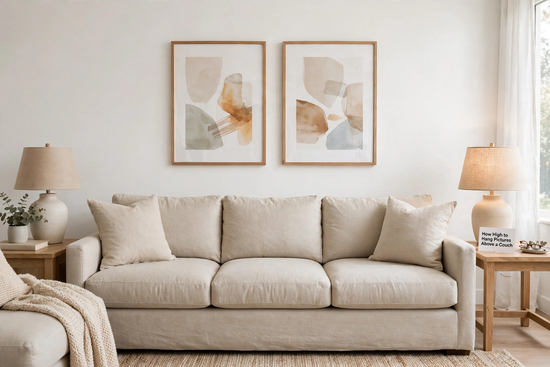

There is a wall in almost every home that never quite gets finished. The space above the bed, the long stretch of hallway, the corner of the living room that looks a little bare once the holiday decorations come down. You know it needs art, but original pieces are expensive, posters can look like a dorm room, and nothing in the store feels personal.
Here is a solution designers have been quietly using for years: frame a silk scarf.
Why scarves make such good wall art
A well-designed silk square is, in effect, a small textile painting. Many are designed as complete compositions, with a central motif and a deliberate border, so they look finished the moment you hang them. A large square is usually around 34 to 36 inches across, which is a generous size for a single statement piece above a sofa, a console or a headboard.
Silk also brings something prints on paper cannot: texture and light. A silk twill has a fine diagonal weave and a soft sheen that shifts as you walk past it. Crepe satin catches the light even more. In a room full of hard surfaces like wood floors, glass, painted walls and stone counters, a framed textile softens everything around it.
And unlike most art, a scarf can come back off the wall. If you decide you want to wear it, or you move house and the colors no longer work, it is still a scarf.
Choosing a scarf for framing
Start with the room, not the scarf. Pull one or two colors that already exist in the space, from a rug, a cushion, the wood tone of a sideboard, and look for a print that repeats them. The border matters as much as the center, because it will sit right next to the frame.
Botanicals warm a room up. Hand-drawn flowers, vines and birds suit bedrooms, breakfast nooks and anywhere you want a softer, more romantic feel.
Geometric and graphic prints read more modern. Grids, stripes and abstract shapes look sharp in a home office, a hallway or a minimal living room.
Look at the edges. Many quality silk twill scarves have hand-rolled hems, which give a soft, rounded finish that looks beautiful when the whole scarf is displayed, edges and all.
If you want somewhere to start, browsing collections of hand-drawn silk twill squares is a good way to get a feel for how different prints and borders will read on a wall.
How to frame it properly
You can absolutely do this yourself, but if the scarf matters to you, a good framer is worth the money. Either way, these are the points to get right:
- Use a box frame or a frame with spacers. The glazing should not press directly against the silk. A little depth also lets the fabric keep its texture rather than being flattened.
- Mount it without glue. Adhesive can stain silk and makes the scarf impossible to remove later. Framers usually stitch the scarf to a fabric-covered backing board with a few fine, discreet stitches along the edge, or pin it with stainless steel pins. Both methods are reversible.
- Decide: float or full bleed. Floating the scarf on a contrasting backing, such as linen or a soft gray, with a few inches of space around it gives a gallery look and shows off rolled edges. Folding the edges behind a mat gives a cleaner, more graphic result but hides the hem.
- Choose UV-filtering glazing. Silk dyes will fade if exposed to strong sunlight over time. UV-protective glass or acrylic slows that process considerably. Acrylic is lighter, which helps for a large frame.
- Press it first. Iron the scarf on the lowest silk setting, with a pressing cloth, before it goes into the frame. Any crease you leave in will be there for years.
Where to hang it
- Above the bed. A single large framed scarf is the right width for most queen beds and adds color without the visual weight of a canvas.
- A pair in a hallway. Two scarves from the same collection, framed identically and hung side by side, make a narrow space feel intentional.
- In a gallery wall. A framed scarf mixed in with prints and photos adds a change of texture that keeps the arrangement from looking flat.
- Avoid bathrooms and direct sun. Humidity and strong light are the two things that shorten the life of framed silk.
Make it personal
The most memorable framed scarves are the ones with a story. A scarf that belonged to a grandmother. One bought on a trip abroad. Or one designed from your own family’s pictures.
Printed-to-order silk has made that last option surprisingly easy. You can now have a custom silk scarf printed edge to edge from a family photo, a child’s drawing or a pet portrait, in sizes from a small pocket square up to a large shawl. Framed, a child’s drawing printed on silk looks completely different from the same drawing in a clip frame, and it becomes the kind of piece guests ask about.
A small project with a big payoff
Framing a silk scarf takes an afternoon, or a single trip to a framer, and it solves the blank-wall problem with something that has more character than almost anything you will find off the shelf. Pick a print you love, give it a frame with a little depth and some UV protection, and hang it where you will see it every day.