


Wondering how to maintain a house exterior? Start with a twice-a-year habit: check and clean the roof, gutters, siding, windows, doors, and foundation every spring and fall. Deal with small stuff like cracked caulk, peeling paint, and clogged downspouts right away, since ignored water damage turns into expensive structural repairs.
Key Takeaways
- Water is the main threat to a home’s exterior, so gutters, caulk, and soil grading deserve the most attention.
- A spring and fall inspection catches most problems while they are still small and cheap to fix.
- Siding should be cleaned with a garden hose or a wide-angle pressure washer tip, never a narrow high-pressure stream.
- Bare wood should be primed and painted within a few weeks, before it soaks up moisture and starts to rot.
- Small, visible fixes at the front door, trim, and landscaping raise curb appeal faster than large remodels.
What Is Exterior Home Maintenance?
Exterior home maintenance is the scheduled inspection, cleaning, and repair of a home’s outer shell, from the roof and gutters down to the siding, doors, windows, foundation, and surrounding soil, so that water stays out and every material lasts its full service life.
How to Maintain a House Exterior: 12 Essential Tips
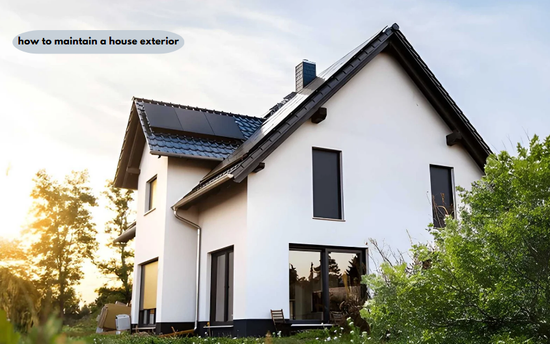
The routine comes down to three jobs: move water away from the house, keep every surface sealed, and look closely twice a year. Work through these 12 tasks each spring and fall, starting at the roof and moving down.
- Scan the roof from the ground. Use binoculars to spot missing, cracked, or curling shingles and loose flashing around chimneys and vents. Hire a roofer for anything above one story.
- Clean gutters and downspouts. Clear them at least twice a year, and more often under oak or pine trees. According to HomeAdvisor, a single professional cleaning visit averages $168, meaning two annual visits come to roughly $336 in total; for a one-story house, a solid ladder and gloves recover their cost in year one.
- Extend every downspout. Send roof water 4 to 6 feet from the foundation with extensions or splash blocks.
- Check the grading. Ground should slope down from the walls, preferably around 6 inches across the first 10 feet, keeping rainwater from collecting near the foundation.
- Wash the siding once a year. Grab a gentle brush, light soap, and an outdoor hose. Scrub from the bottom up and rinse from the top down to prevent streaks.
- Spot-prime and touch up paint. Scrape loose paint, prime bare wood within a few weeks, and repaint failing patches before the whole wall needs work.
- Replace cracked caulk. Cut out old caulk at trim, corner boards, and pipe or wire openings, then apply an exterior-grade sealant.
- Inspect windows and doors. Replace torn weatherstripping and worn door sweeps, and clear the small drain holes along window frames.
- Trim plants back. Keep shrubs about 12 inches from siding and branches well clear of the roof so walls dry out and pests lose an easy path inside.
- Probe for rot and pests. Press a screwdriver into sills, fascia, and deck posts; wood that gives way needs repair. Mud tubes on the foundation signal termites.
- Seal decks and paving. Reseal wood decks once water stops beading on the surface, and fill concrete and asphalt cracks before freeze-thaw cycles widen them.
- Winterize outdoor fixtures. Shut off and drain hose bibs before the first freeze, and check porch lights, house numbers, and mailbox posts.
Siding and roofing manufacturers publish comprehensive guides for their own products, and those care instructions take priority over general advice when a warranty is still active.
Spring vs. Fall Exterior Checklist
Spring fixes winter wear; autumn readies for icy conditions.
| Task | Spring | Fall |
| Roof | Check storm damage. | Check before winter |
| Gutters | Clear debris | Clear after leaf drop |
| Siding | Wash | Inspect |
| Caulk | Repair cracks. | Seal gaps |
| Hose bibs | Check for leaks. | Shut off and drain |
| Deck | Reseal if needed. | Clear debris |
Does Sealing Gaps Around Windows and Doors Lower Energy Bills?
Yes. Closing gaps in the outer shell keeps heated or cooled air inside and keeps wind-driven rain out of the walls.
ENERGY STAR estimates that sealing air leaks and adding insulation in attics and over crawl spaces cuts a typical home’s heating and cooling spending by 15% on average. For a household that spends $1,800 a year on heating and cooling, that works out to about $270 saved each year.
That average assumes insulation upgrades as well, so exterior caulking and weatherstripping alone deliver only part of it. Start with gaps where you can feel a draft or see daylight, then add attic insulation to capture the rest. A sealed shell also protects interior design investments, because steady indoor humidity keeps wood floors, trim, and painted walls from cracking.
What Exterior Maintenance Mistakes Cause the Most Damage?
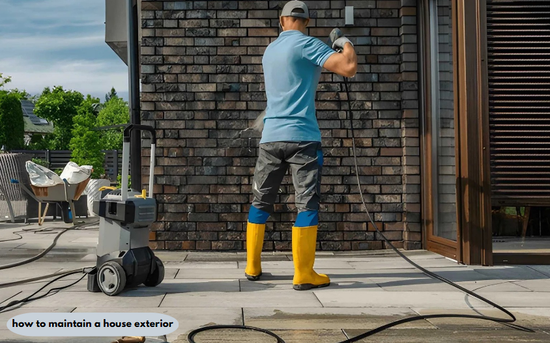
The costliest mistakes trap water against the house instead of shedding it. Each one starts with good intentions, which is why so many homeowners make them.
Pressure washing too hard. A narrow nozzle feels faster, but it forces water behind vinyl laps and gouges soft wood. Use a 25- or 40-degree tip, stand at least 2 feet back, and aim downward.
Caulking every gap in the siding. Sealing the bottom edges of lap siding and window drain holes blocks the paths built to let water escape, so moisture rots the sheathing behind it. Caulk vertical joints and trim, and leave horizontal laps open.
Painting over dirt or chalk. New paint on a dirty or powdery surface peels within a season or two, so even a homeowner who has learned how to choose the right paint color loses the result. Wash the wall, let it dry for 48 hours, and rub it with your palm; if chalk comes off, apply a bonding primer first.
Piling mulch against the walls. Mulch and soil touching siding hold moisture and invite termites. Keep both at least 6 inches below the bottom edge of the siding.
How Can You Boost Curb Appeal Without a Big Remodel?
Focus on the entry, the trim, and whatever a visitor sees in the first few seconds. Clean, repaired, and freshly painted surfaces matter more than expensive additions.
If you want to know how to improve curb appeal on a budget, start at the front door. New hardware, fresh paint, larger house numbers, and a working porch light cost little and change the whole view from the street.
Larger exterior swaps also pay back at sale. According to the 2025 Cost vs. Value Report from Zonda’s Journal of Light Construction, a garage door replacement averaged $4,672 and recouped 268% of its cost at resale. A homeowner who spends that average gets back about $12,507, roughly $7,835 more than the outlay, though returns shift by region, so check your local market before buying.
Not every study agrees: the 2025 Remodeling Impact Report from the National Association of Realtors and NARI found no project returning more than its full cost, so treat these figures as upper-end estimates.
| Exterior project | Average cost (2025) | Share of cost recouped at sale | Source |
| Steel entry door replacement | $2,435 | 216% | Zonda, 2025 Cost vs. Value Report |
| Manufactured stone veneer | $11,702 | 208% | Zonda, 2025 Cost vs. Value Report |
| Fiber-cement siding replacement | $21,485 | 114% | Zonda, 2025 Cost vs. Value Report |
The pattern is clear: lower-cost projects on the street-facing side of the house return the highest share of their cost.
How Do You Pick an Exterior Paint Color That Lasts?

Choose a color that works with the parts you cannot change, such as the roof, brick, or stone, and test it on the house before you commit.
Paint 2-foot swatches on a sunny wall and a shaded wall, then view them in morning and evening light. Very dark shades on vinyl siding absorb heat and can warp the panels unless the paint is labeled vinyl-safe.
For owners asking how to make an old house look modern, a simple exterior design shift does most of the work: one body color, crisp contrasting trim, black or bronze fixtures, and clean-lined planters. Make the front door the single focal point, and keep everything around it quiet.
When Does Standard Exterior Advice Not Apply?
Older homes are the main exception, because scraping, sanding, and pressure washing old paint can release lead dust. Estimates from the Environmental Protection Agency show that about three in four American homes built before 1978 still carry some lead paint. If your house predates 1978, test the paint with an approved kit before any prep work, hire a lead-safe certified painter if the test is positive, and confirm color and material changes with your HOA or historic district board before you start.
Climate also shifts priorities. In cold regions, prevent ice dams with good attic insulation. In humid regions, wash off mildew and repaint sun-faded south and west walls sooner. On the coast, rinse salt from fixtures every few months and use stainless or coated hardware.
Frequently Asked Questions
How often should you inspect the outside of your house?
Inspect the exterior twice a year, in spring and fall, and again after any major storm. Spring checks reveal winter damage, while fall checks prepare gutters, caulk, and faucets for freezing weather.
How much does exterior maintenance cost per year?
A common rule is to budget about 1% of your home’s value yearly for all maintenance. Doing inspections yourself keeps most years well below that.
What is the most important exterior maintenance task?
Keeping water away from the house is the most important task. Clean gutters, long downspouts, and soil that slopes outward prevent rot, mold, and foundation cracks.
Can you pressure wash vinyl siding safely?
Yes, as long as you use low pressure, a wide-angle tip, and a downward spray angle. Spraying upward pushes water behind the panels, where it stays trapped.
When is the best time to paint a house exterior?
Paint on dry days when temperatures stay inside the range printed on the paint label. In most of the U.S., that means late spring through early fall, avoiding direct midday sun and evening dew.
Which exterior jobs should you leave to a professional?
Leave roof repairs, two-story gutter work, electrical fixtures, and lead paint removal to licensed or certified pros. These jobs carry fall, shock, or health risks that outweigh the labor savings.
Conclusion
Knowing how to maintain a house exterior comes down to one habit: inspect every spring and fall, and fix small water problems before they spread. A clean, sealed, and freshly painted shell lasts longer, costs less to own, and makes a stronger first impression when it is time to sell.
