
Cypress trees look best when you match each species to a job: Italian cypress for vertical accents, Leyland or Arizona cypress for screens, and bald cypress for wet ground. Space cypress trees for their mature width, mix species to limit disease, and plant them well away from walls.
Key Takeaways
- Italian cypress grows as a narrow column that frames doors, gates, and driveways while taking up very little ground.
- Leyland cypress screens a yard within a few seasons, but it outgrows small lots unless you trim it regularly.
- Spacing cypress trees for their full mature width prevents the inner browning that ruins many privacy hedges.
- Bald cypress drops its needles each fall and tolerates soggy soil, so it suits rain gardens and pond edges.
- Planting two or three cypress species together keeps one disease from wiping out an entire screen.
What Are Cypress Trees?
Cypress trees are cone-bearing trees in the Cupressaceae family, known for scale-like or feathery foliage, small round cones, aromatic wood, and long lifespans. The name covers true cypresses such as Italian and Arizona cypress, the Leyland hybrid, and the deciduous bald cypress.
In exterior design, cypress trees fall into three working groups: columns for accents, dense pyramids for screens, and broad shade trees for wet or open lawns. Knowing which group a tree belongs to tells you where it fits before you look at a single plant tag.
Which Cypress Trees Are Best for Your Home?
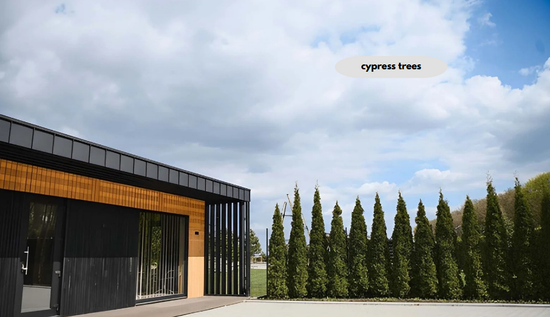
The best cypress trees for your home depend on the job. Choose Italian cypress for tall, slim accents, Leyland or Arizona cypress for screens, and bald cypress for low, wet spots.
Check your USDA hardiness zone before buying, because most evergreen cypress species need mild winters. County extension guides list the zone range for each species in your area.
| Cypress type | Mature size or growth | Best design role | Source |
| Italian cypress | 40–60 ft tall, usually no more than 3 ft wide | Entry framing, formal rows, Mediterranean homes | UF/IFAS Extension |
| Leyland cypress | 60–70 ft tall, 12–20 ft wide | Fast privacy screens on large lots | Clemson Cooperative Extension HGIC |
| Roughbark Arizona cypress | 30–40 ft tall | Drought-tolerant screens, blue-gray color accents | UF/IFAS Extension |
| Bald cypress | Grows 1–2 ft per year | Wet sites, shade, copper fall color | Clemson Cooperative Extension HGIC |
The width column matters more than height. Width decides tree spacing, walkway clearance, and how close cypress trees can sit to your siding.
What Are the 6 Essential Design Tips for Cypress Trees?
The six essentials are to match the shape to the architecture, frame the entries, screen the space for mature width, use bald cypress in wet zones, mix species, and bring cypress indoors. Each one solves a specific problem homeowners face with cypress trees.
1. Match the Tree’s Shape to Your House
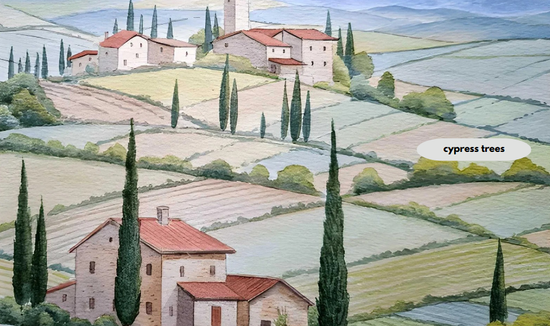
Narrow, upright cypress suits tall stucco, Spanish, Mediterranean, and modern homes, while broader pyramidal forms suit ranch and colonial houses. Pick the silhouette first and the species second.
A two-story stucco house looks balanced with an Italian cypress at each front corner because the vertical lines echo the walls. A low ranch house looks crowded by 50-foot columns. The rule behind exterior design by drhomey is simple: let the roofline set the tree height, then choose a species that stays in proportion.
2. Frame Entries and Views With Italian Cypress
Plant Italian cypress in matched pairs or evenly spaced rows to lead the eye toward a front door, gate, or driveway. The slim form adds height without blocking paths.
Set each tree at least 4 feet back from a walkway edge so foliage never brushes guests. Along a driveway, repeat trees every 8 to 10 feet for a formal allée, since tighter spacing reads as a wall rather than a rhythm.
3. Space Privacy Screens for Mature Width
Space screening cypress trees by their mature width, not their nursery size, and stagger them in two rows for faster coverage. Crowded trees shade each other and brown out from the inside.
UF/IFAS Extension’s Leyland cypress fact sheet, revised in 2024, puts young-tree growth at 3 to 4 feet of new height each season. Use that pace to plan a real screen for a 60-foot back property line and a 10-foot privacy goal:
- Measure the line: 60 feet.
- Set Leyland spacing at 12 feet on center, the low end of its mature width. That gives 5 gaps, so you need 6 trees.
- For faster fill, plant a staggered double row: two rows 6 feet apart, with trees 12 feet apart in each row, offset by 6 feet. That uses 11 trees.
- Estimate the timeline: a 4-foot nursery tree needs 6 more feet. At 3 feet a year, that takes 2 growing seasons, plus about 1 year for roots to establish, so plan on 3 years.
- Compare Italian cypress: at roughly 3 feet wide, a solid wall needs 3-foot centers, which means 21 trees for the same line.
The decision rule: on planting strips wider than 10 feet, Leyland gives more screen per tree. On strips under 5 feet wide, Italian cypress is the only one of the two that fits.
4. Use Bald Cypress in Wet Zones
Plant bald cypress in rain gardens, soggy low corners, or along pond edges, where most evergreen cypress trees develop root rot. It thrives in standing water and in ordinary lawn soil.
In wet ground, bald cypress grows knobby “knees” around its base, which add sculptural interest to a water feature. In fall, the needles turn rusty copper before dropping, giving you seasonal color an evergreen can’t offer.
5. Mix Species in Long Screens
Combine two or three species in any screen longer than about 40 feet so a single pest or disease can’t kill the whole row. Mixed screens also look more natural.
When designing a mixed screen, alternate Leyland with Arizona cypress, arborvitae, or holly. Keep mature heights within about 10 feet of each other so the top line stays even.
6. Bring Cypress Indoors
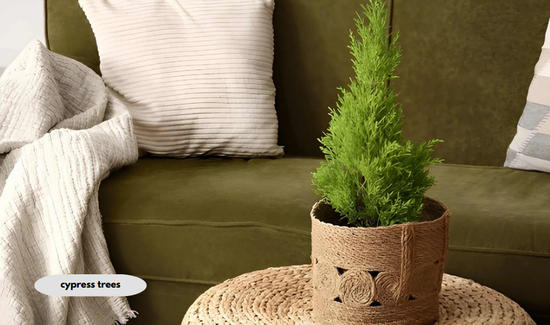
Cypress works indoors through wood finishes, potted plants, and cut greenery. Its rot-resistant timber fits sunrooms, bathrooms, and porch ceilings.
Lemon cypress grows in a container near a bright south-facing window for a season, then needs outdoor time in spring. Cut branches from cypress trees also last for weeks in winter arrangements and wreaths.
Why Do Cypress Privacy Screens Turn Brown?
Most browning in cypress trees comes from crowding, drought stress, or canker disease. Screens made only of Leyland cypress suffer most.
What Causes It
Browning starts at planting. Homeowners set trees 6 to 8 feet apart for instant privacy, and within a decade the inner branches lose sunlight and die.
How to Prevent It
The University of Arizona Cooperative Extension’s November 2025 handout on Seiridium canker reports that no chemical treatment controls the disease. That makes prevention your only defense:
- Space trees for mature width, and use a staggered row.
- Water deeply every 1 to 2 weeks during drought.
- Cut out brown branches with disinfected pruners.
- Replace dead trees with a different species.
When the Usual Advice Doesn’t Apply
These tips work for most of the country, but not in northern states with harsh winters, where evergreen cypress often suffers windburn. Bald cypress survives the cold but drops its needles in fall. For privacy throughout the year, combine it with either spruce or arborvitae.
What Are Some Interesting Facts About Cypress Trees?
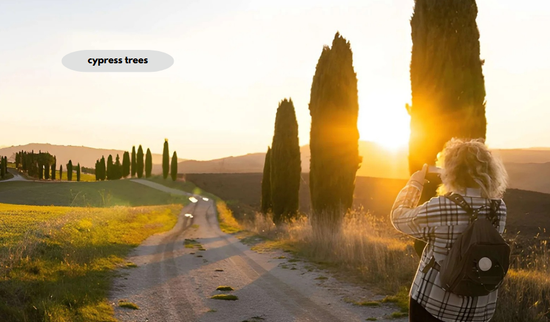
Cypress trees include some of the longest-lived trees in North America, and that longevity affects where you plant them. A tree that lasts centuries needs a spot planned for centuries.
A 2019 study in Environmental Research Communications dated one bald cypress on North Carolina’s Black River to at least 2,624 years. A bald cypress you plant now will almost certainly outlive your house, so give it at least 25 feet of clearance from foundations, septic fields, and power lines.
A few other interesting facts shape design choices too. Bald cypress is Louisiana’s state tree, and its knees rarely form in dry lawns. Cypress wood has long been used for boats, shingles, and siding because it resists rot, which is why cypress paneling and vanities remain popular in interior design for humid rooms.
Frequently Asked Questions
How far from the house should you plant cypress trees?
Plant a cypress at least half its mature width from the house, plus 3 to 5 feet for airflow and maintenance. For Italian cypress, that means about 5 feet. For Leyland cypress, plan on 9 to 15 feet.
Do cypress trees grow well in pots?
Italian and lemon cypress grow in large containers for several years if they get full sun and the pot drains freely. Use a container at least 20 inches wide, water when the top 2 inches of soil dry out, and move the tree into the ground once roots circle the pot.
Are cypress tree roots invasive?
Cypress roots are not generally considered invasive, but large species still need room. Keep big trees away from paving, pipes, and foundations so their roots and trunk flare have space as they mature.
Do cypress trees lose their leaves in winter?
Only bald cypress and pond cypress drop their needles in fall. Italian, Leyland, and Arizona cypress stay green all year, which makes them the better choice for winter privacy.
Can you cut the top off an Italian cypress to keep it short?
You should avoid topping an Italian cypress, because the cut leaves a flat, ragged top that never regrows into a point. If height is a concern, choose a compact cultivar or a narrow juniper from the start.
Conclusion
Cypress trees reward homeowners who plan for mature size, not nursery size. Choose cypress trees by the job they need to do, space them for their full width, and mix species so one disease never claims the whole yard. Planted this way, DrHomey readers can enjoy cypress trees that look better every year.