

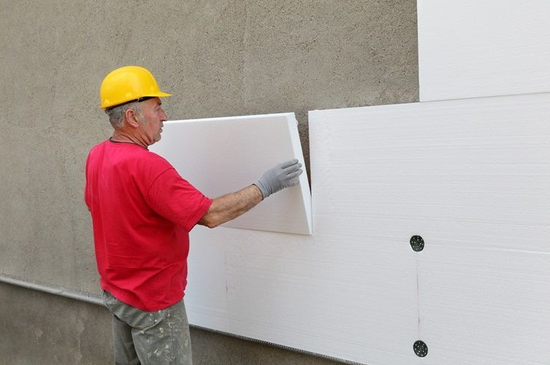
Most people’s mental model of polystyrene foam is formed by encounters with it as packaging — the white block that arrived around a new appliance, the takeaway cup that kept coffee warm for twenty minutes, the beads that escaped from a bean bag and spent weeks appearing in unexpected locations around the house. This packaging association has done consistent damage to how the material is understood in contexts where it performs as a serious industrial and construction material with engineering characteristics that are genuinely difficult to replicate in any single alternative. Polystyrene foam sheets used in cold chain logistics, insulated concrete formwork systems, and marine flotation applications where they have been sitting in direct water contact for years without degrading tell a completely different story from the one that the packaging association creates. The conversation changes considerably when the question shifts from how the material looks in a recycling bin to how it performs in situations where the engineering requirements are demanding and the alternatives have had decades to displace it without success.
Thermal Efficiency at a Density That Nothing Matches
The thermal insulation performance of expanded polystyrene relative to its density is the property that drives most of its construction applications, and it is more impressive than people who have not engaged with the insulation market technically tend to appreciate. The closed-cell structure traps air in a way that prevents convective heat transfer through the material, and the result is thermal resistance per unit thickness that competes with materials produced through considerably more complex manufacturing processes. More importantly, it maintains that performance under installed conditions — it does not settle, does not absorb moisture in ways that degrade its thermal properties, and does not change its behaviour over the service life of the building in the way that some insulation materials do when the gap between laboratory performance and real-world installed performance opens up over time.
Moisture Behaviour That Changes Where It Can Be Used
Polystyrene foam sheets can be used in building applications where moisture-sensitive insulation materials cannot be specified without additional protective measures, and this characteristic quietly expands the range of situations in which the material is the appropriate choice beyond what its thermal performance alone would justify. Below-grade insulation applications, insulation in contact with concrete, and applications where the insulation layer is subject to incidental water exposure or long-term humidity levels that would degrade hygroscopic alternatives all benefit from a material that does not absorb moisture in ways that compromise its performance or contribute to the biological conditions that promote mould growth and structural degradation. This resistance is not a treated property that might diminish over time — it is an intrinsic characteristic of the material’s closed-cell structure.
What Impact Absorption Actually Does in Transit
The protective packaging performance of expanded polystyrene deserves to be understood properly because it is based on an engineering principle that alternatives struggle to match at equivalent weight — the material’s ability to deform under impact loading and distribute force across a protected item rather than transmitting it as a concentrated load at the point of contact. This deformation-based protection mechanism is particularly effective for fragile items where the damage threshold is low and the impact energies encountered in normal freight handling can easily exceed that threshold without adequate cushioning. Polystyrene foam sheets formed into packaging configurations for electronics, laboratory equipment, and medical devices are performing a genuine engineering function that cheaper alternatives — paper padding, air pillows — do not replicate with the same consistency across the range of impact conditions that real logistics environments generate.
Construction Applications Beyond the Insulation Board
The building construction applications of expanded polystyrene extend well past the insulation board that most people associate with the material in a construction context — into the void-forming elements in concrete waffle slabs, the fill material in insulated concrete formwork systems, the core of structural insulated panels, and the lightweight fill below concrete slabs on ground where its compressibility is a feature rather than a limitation because drainage and separation rather than rigid support are the requirements being addressed. Each of these applications exploits a different combination of the material’s properties, and the diversity of the list demonstrates that the material is being used by engineers who have thought carefully about what each application actually requires rather than defaulting to it because it is cheap and familiar.
Marine Flotation and Continuous Water Exposure
The flotation applications of expanded polystyrene in pontoon systems, dock construction, aquaculture pen support, and similar marine applications rest on a characteristic that distinguishes it from hollow flotation alternatives — the buoyancy is distributed throughout the material rather than contained within an enclosed air space that loses its effectiveness if the outer shell is damaged. A polystyrene foam float that has been punctured or surface-damaged continues to provide buoyancy because the structural principle does not depend on the integrity of a sealed chamber, and this resilience under damage is significant for applications where the flotation element is in continuous water contact and subject to the mechanical impacts that marine environments generate across years of service without replacement or inspection.
Conclusion
Polystyrene foam sheets perform across a range of applications — thermal insulation, protective packaging, cold chain containment, concrete construction systems, acoustic underlays, and marine flotation — in ways that consistently reflect genuine engineering advantages rather than simple availability or familiarity. The material’s packaging reputation has kept a more complete understanding of its properties from being widely held, and that gap in understanding is most visible when engineers who know the material well explain why they keep specifying it in situations where the alternatives have had decades to displace it and have not managed to do so convincingly.