
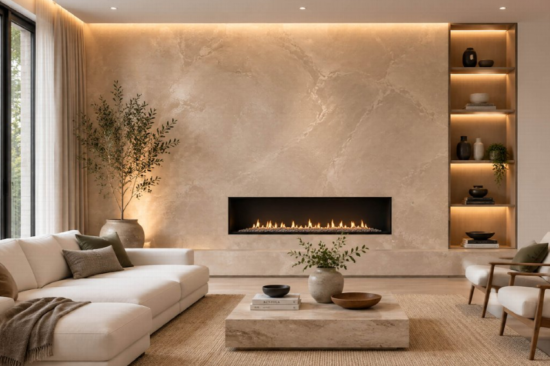
If you’ve spent any time scrolling home inspiration lately, you’ve probably noticed it: walls that look less like walls and more like polished stone. That soft, marble-like glow isn’t paint, and it isn’t wallpaper either. It’s Venetian plaster, and it’s having a real moment in home design right now.
But before you rip out a gallon of eggshell and call a plasterer, it’s worth understanding what this finish actually is, where it makes sense, and where a simpler update might serve you just as well.
What Makes Venetian Plaster Different From Paint
Traditional Venetian plaster is typically lime-based and may incorporate finely ground marble, creating the depth and subtle movement associated with the finish. Modern systems vary — some lean more mineral, some include other additives — but the application method is what sets the look apart: thin layers, hand-applied and burnished. Instead of one flat coat of color, you end up with a surface that has real dimension — subtle movement, soft light reflection, and a texture you can feel with your hand.
Paint sits on top of a wall. Venetian plaster becomes part of it. That’s the whole appeal, and it’s also why the process takes more skill and more time than a weekend painting project.
Where It Actually Makes Sense in a Home
This isn’t a finish you need in every room, and that’s okay. It tends to earn its keep in spaces meant to feel a little special:
- Entryways and staircases — the first impression of the house
- Fireplace surrounds — plaster wraps seamlessly around a fireplace with no grout lines to interrupt the look
- Primary bedrooms and living rooms — anywhere you want a quieter, more textural alternative to a bold paint color
- Powder rooms — a small space is the perfect place to try a dramatic finish without committing to an entire house
Kitchens and full bathrooms need a little more thought, since not every plaster system is designed for constant moisture. If you’re drawn to it for a shower surround or a busy kitchen backsplash wall, that’s a conversation to have with whoever is installing it — the right sealer and system matter more than the finish itself.
Venetian Plaster vs. Paint vs. Wallpaper: The Real Trade-Offs
None of these options is objectively “better.” They just solve different problems.
Paint is fast, affordable, and easy to change again in a few years if your taste shifts.
Wallpaper brings pattern and personality in a way plaster can’t — florals, grasscloth, murals — and it’s often quicker to install than a hand-applied plaster finish.
Venetian plaster is the choice when you want texture and depth rather than pattern or color alone, and when you’re planning to live with a wall for a long time rather than refresh it every few seasons.
If you’re weighing all three for one project, it often comes down to what the room is for. A nursery or a rental might call for something more flexible. A forever-home entryway or a fireplace wall you’ll look at every day for the next decade is where plaster tends to shine.
Is It a DIY Project?
Technically, yes — there are DIY Venetian plaster kits sold at most paint and hardware stores. Realistically, the finish is unforgiving. Burnishing technique, timing between coats, and even the humidity in the room on installation day all affect the final look. A DIY attempt can turn out beautifully or turn out patchy, and there’s not a lot of middle ground once the plaster has cured.
If the goal is a small, low-stakes accent (say, a single powder room wall) and you’re comfortable with an imperfect, more rustic result, DIY can be a fun weekend project. If the wall is a focal point you’ll be staring at for years, it’s worth having a professional handle the application — the material cost is often a smaller piece of the budget than the labor and skill that go into a clean finish.
For homeowners in Colorado exploring this option, EnjoyTheWall specializes in Venetian plaster finishes in Colorado, including Marmorino, Grassello, and Travertino styles, and can walk you through which finish fits your space and how it holds up in our dry climate.
What Makes Venetian Plaster Cost More (Or Less)
If you’ve priced this out and been surprised by the range in quotes, it usually comes down to a few factors rather than the material itself.
Wall prep is often the biggest variable. Venetian plaster shows every imperfection underneath it, so a wall with cracks, texture, or an uneven surface needs more prep work before the first coat goes on. A freshly finished drywall wall is a much easier — and cheaper — starting point than an older wall that needs patching and leveling first.
The finish you choose matters. A soft, matte finish takes fewer coats and less burnishing time than a mirror-polished one. If you’re comparing quotes and one is noticeably lower, it’s worth asking exactly which finish and how many coats are included — “Venetian plaster” isn’t one single price point, it’s a range of techniques.
Room shape adds labor, not material. Lots of corners, archways, or a curved wall all take more time to plaster evenly than one flat, open surface. This is labor cost, not a markup — hand-applied finishes simply take longer around detail work.
Moisture areas need a different system. A bathroom or shower wall isn’t priced the same as a bedroom accent wall, because it usually requires additional waterproofing steps and a sealer rated for the space. If a quote for a wet area seems unusually low, ask what waterproofing system is included.
None of this means plaster has to be unaffordable — a single accent wall or fireplace surround is a very reasonable way to try the finish without plastering an entire room.
Questions Worth Asking Before You Commit
Whether you’re getting quotes or just deciding if this is the right project, a few questions can save you from a mismatched result:
- Which specific finish are we talking about? Matte, satin, and mirror-polished all look and perform differently — make sure the sample you loved matches what’s being quoted.
- How many coats are included, and what’s the burnishing process? This affects both the final look and the price.
- Is the wall ready, or does it need leveling first? If you have textured walls, ask how that’s addressed before plaster goes on.
- Is this finish suitable for the room I have in mind? Not every plaster system is meant for a shower wall or a high-humidity bathroom.
- How is it maintained, and can it be repaired if it’s scratched or chipped? A hand-applied finish should also be repairable by hand, without redoing the whole wall.
Asking these upfront tends to prevent the most common regret with this finish: loving a photo online, then ending up with something that doesn’t quite match once it’s on your own wall.
The Bottom Line
Venetian plaster isn’t a trend you need to chase in every room, but in the right spot — a fireplace, an entry, a bedroom wall you’ve always wanted to feel more elevated — it can change how a whole house feels. Start small if you’re unsure. One wall is often all it takes to see whether this finish earns a permanent place in your home.