
A dining table is more than a place to sit down for a meal. It often becomes the centre of family dinners, weekend catch-ups, homework sessions and celebrations. Choosing the right dining table means considering the size of the room, the number of people using it, the preferred style and how the table fits into everyday life. With the right choice, the dining area can feel practical, inviting and well suited to the home.
Why Choosing the Right Dining Table Matters
The dining table has a strong presence in any dining area, so its size and shape can affect how the entire room feels. A table that is too large may make movement difficult, while one that is too small might not provide enough seating for regular meals or guests.
A suitable table also needs to work with existing furniture. The dining chairs, lighting, flooring and surrounding décor all contribute to the finished look. Getting the proportions right can make the room easier to use while creating a more balanced setting for everyday dining.
How to Find the Right Dining Table for Your Space
Start With the Size of Your Dining Space
Begin by measuring the dining area, including doorways and walkways. Measure the length and width available for the table, then consider how much room is needed for chairs to be pulled out comfortably.
Avoid choosing a table based only on the available floor area. Think about how people move around the room and whether drawers, cupboards or nearby doors need additional clearance.
Choose a Dining Table Shape That Works With Your Room
The shape of a dining table can change both the appearance and function of a room.
- Rectangular Dining Tables: A rectangular dining table is a popular choice for larger rooms and households that need several seats. Its long surface also works well when serving multiple dishes during family meals.
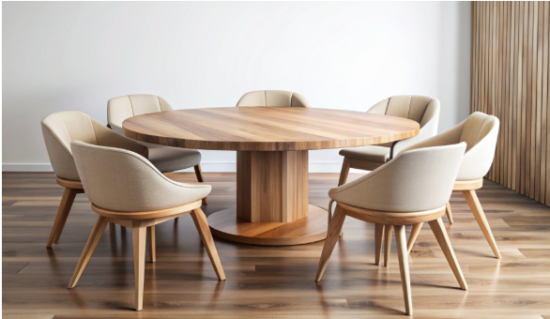
- Round Dining Tables: Round tables are useful in compact dining areas because there are no sharp corners taking up extra space. They also make conversation easier, as everyone sits at a similar distance from one another.
- Oval Dining Tables: An oval table offers the length of a rectangular design while using softer, curved edges. This can be a good option for homes where a long table is needed without a strong angular look.
Think About How Many People You Need to Seat
Consider the usual number of diners rather than choosing a table based solely on occasional gatherings. A four-seater may suit a couple or small household, while a six-seater can provide more flexibility for family meals and visitors.
If entertaining is a regular part of life, an extendable dining table may be worth considering. It can remain compact on ordinary days and offer additional seating when required.
Consider Your Lifestyle Before Choosing a Table
Think about how the table will be used each day. A busy family may need a sturdy surface that can cope with frequent meals, spills and general wear. A household that hosts dinner parties may prefer a larger table with generous serving space.
Homes where the dining table doubles as a workspace may also benefit from a durable finish and enough surface area for laptops, books and other essentials.
Choose a Material That Suits Your Home
Material affects the look, maintenance and everyday practicality of a dining table.
- Timber Dining Tables: Timber dining tables offer a natural appearance and can suit a wide range of interiors. Different timber tones and finishes can create anything from a relaxed coastal feel to a more refined dining setting.
- Glass Dining Tables: Glass tables can help a room appear more open, particularly where floor space is limited. They suit contemporary interiors and are relatively simple to wipe clean.
- Stone or Marble-Style Dining Tables: Stone and marble-style surfaces can create a sophisticated focal point in the dining room. They tend to suit modern and classic interiors.
Match Your Dining Table With Your Dining Chairs
The table and dining chair combination should feel considered without requiring every piece to be identical. Matching colours, materials or design details can create a coordinated appearance, while contrasting styles can add character.
Pay attention to chair height as well. There should be enough space between the seat and tabletop for comfortable dining, particularly when the chairs have arms.
Think About the Overall Style of Your Home
The dining table should make sense alongside the home’s existing furniture. A clean-lined table may suit a contemporary interior, while a timber design can work well in rustic, farmhouse or coastal settings.
Colour matters too. Dark finishes can create a strong statement, while lighter tones may help a smaller dining area feel more spacious. The aim is to choose a design that feels natural within the room rather than looking out of place.
Common Dining Table Buying Mistakes to Avoid
One common mistake is buying a table before measuring the room properly. Even a beautiful design can become frustrating if chairs cannot be pulled back or people cannot walk around it comfortably.
Another mistake is overlooking the table height and chair dimensions. Always check measurements together before making a decision.
It is also easy to focus too heavily on appearance while ignoring maintenance. Consider cleaning requirements, household habits and the amount of daily use before selecting a material.
Finally, avoid choosing more seats than the room can realistically accommodate. Extra capacity is useful, but not when it makes the dining area cramped every day.
Conclusion
Choosing the right dining table involves more than finding a design that looks appealing. Size, shape, seating capacity, material, chair compatibility and interior style all deserve attention. A well-selected table can support everyday routines while providing a comfortable setting for meals, conversations and gatherings. Taking accurate measurements and considering how the space is actually used can make the buying process much easier.
Frequently Asked Questions
Which dining table shape is best for a small space?
Round tables are often a practical choice for smaller rooms because their curved edges make movement easier. Oval tables can also work well where the room has a compact, symmetrical layout.
Is a round or rectangular dining table better?
Neither is universally better. A rectangular table generally suits longer rooms and larger households, while a round table can work particularly well in smaller spaces and encourages easy conversation.
How many people can sit comfortably at a 6-seater dining table?
A six-seater dining table is generally designed to accommodate six people comfortably, although the exact capacity depends on the table’s dimensions and the size of the dining chairs.
Should my dining table match my dining chairs?
Not necessarily. Matching finishes can create a coordinated look, while complementary colours and materials can give the room more personality. Comfort and correct proportions should come first.
What dining table is best for a family home?
A sturdy table with a durable, easy-care surface is often a practical choice for a family home. Timber and quality engineered surfaces can work well for regular use, while an extendable design may provide useful flexibility for larger gatherings.